Sprung systems reduce impact forces and improve athlete comfort. Layer composition is tuned to sport type.
Moisture control is essential to preserve performance.

Indoor Surface
Sprung sub-structure beneath wood flooring to improve energy return and reduce impact.
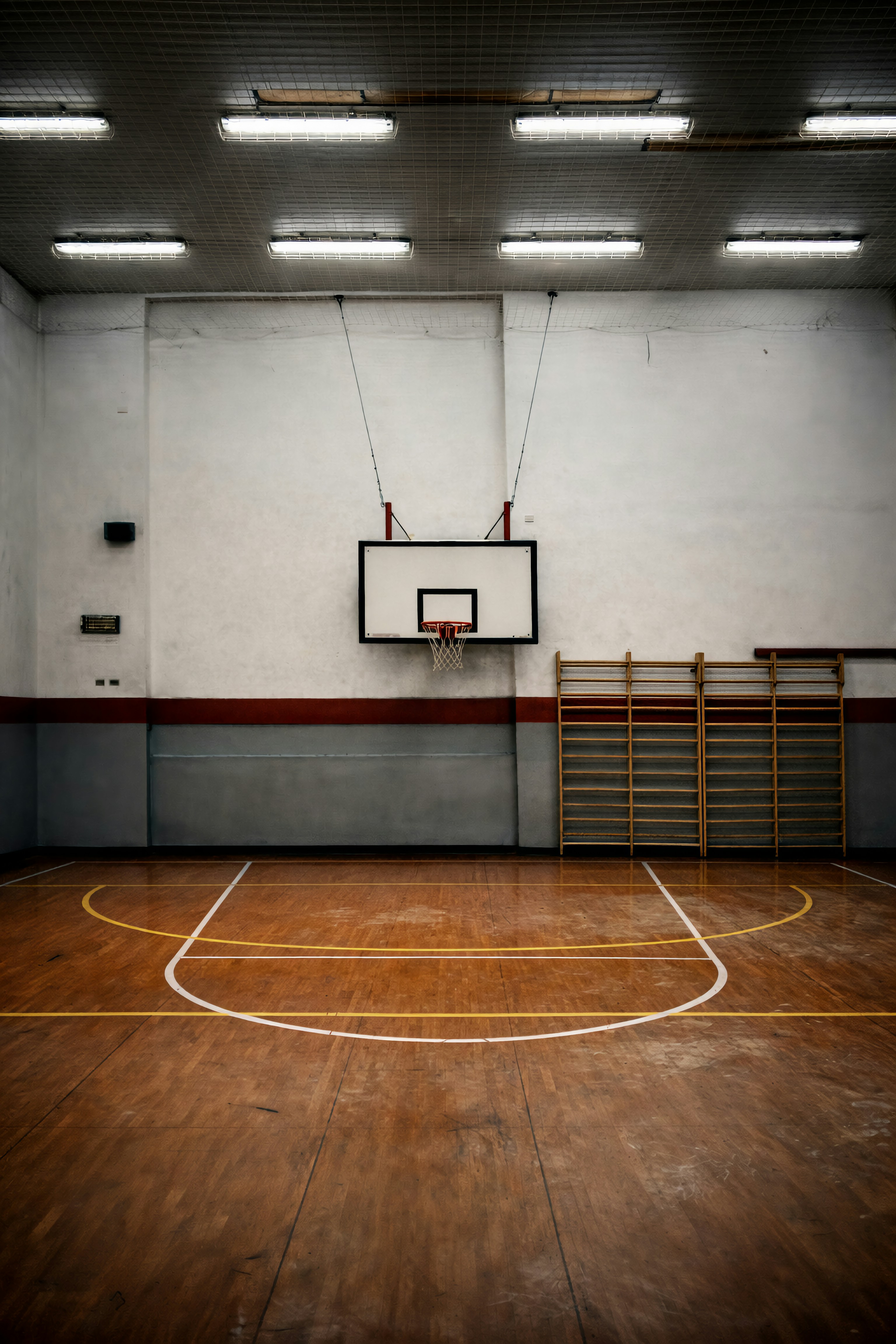
A sprung wood floor system is an engineered flooring system that combines the playing characteristics of hardwood with a shock-absorbing substructure. The 'spring' comes from resilient elements — rubber pads, coiled springs, or foam battens — installed between the concrete base and the hardwood surface, decoupling the floor from the rigid concrete beneath.
Sprung floors are mandated or strongly recommended by FIBA (basketball), FIVB (volleyball), IHF (handball), BWF (badminton), and gymnastics governing bodies for all competition venues. The shock absorption provided by the spring system reduces the impact forces transmitted to athletes' knees, ankles, and hips — critically important in jumping-intensive sports.
In India, sprung wood floors are installed in national sports facilities, premier sports academies, hotel banquet-plus-sports halls, and large institutional gymnasiums. The combination of hardwood aesthetics with engineered performance makes this the most complete indoor sports floor system available.
| Parameter | Detail |
|---|---|
| System Components | Spring/pad sub-structure + plywood intermediate layer + hardwood finish |
| Hardwood Species | Maple (MFMA) or European beech |
| Total System Depth | 60–120mm from concrete to hardwood surface |
| Shock Absorption | ≥30% (FIBA Level 1); ≥25% (BWF) — per EN 14808 |
| Lifespan | 25–40 years for the system; surface resandings every 5–10 years |
| India Cost Range | ₹5,000 – 12,000/sqm installed (maple sprung system) |
| Climate Control | HVAC required — maintain 45–65% RH, 18–22°C |
| Certifications | FIBA Level 1 & 2; BWF Approved; FIVB Approved; IHF Compliant |
Sprung systems reduce impact forces and improve athlete comfort. Layer composition is tuned to sport type.
Moisture control is essential to preserve performance.
A direct-bond wood floor has the hardwood nailed or glued directly to the concrete (or plywood battens on concrete). A sprung floor has resilient pads, rubber spacers, or coil springs between the structure and the concrete, giving the entire floor an elastic response to impact. Sprung floors absorb significantly more shock and are required for competition-level sports. Direct-bond wood looks similar but does not meet FIBA/BWF shock absorption requirements.
In most Indian locations, yes. Humidity variation from 30% RH (dry winter) to 90% RH (monsoon) will cause solid hardwood to expand and contract significantly — resulting in warping, cupping, and gap formation without climate control. Engineered hardwood (thin veneer over plywood) is more tolerant but still benefits from humidity control. A basic split-system AC to maintain 45–65% RH is the minimum requirement.
A 22mm solid hardwood face can be resanded approximately 8–12 times over its lifespan, depending on how much wood is removed each time. An engineered hardwood with a 5mm veneer can be resanded 2–4 times. Resanding removes 0.5–1.5mm of wood per sanding and is done to remove scratches, even out surface wear, and reapply the finish coat.
Three main spring system types: (1) Fixed rubber pads — dense rubber blocks at regular spacing, most affordable, good for club facilities; (2) Adjustable rubber pad and batten systems — allow levelling of the floor during installation; (3) Steel coil spring systems — most sophisticated, provide the most uniform response across the floor, required for high-level competition. The type of spring system determines the shock absorption performance.
Yes — provided the existing concrete floor is level and there is sufficient ceiling height to accommodate the additional 60–120mm of the sprung floor system. We check ceiling height clearances, door frame heights, and skirting/plinth board requirements before designing a retrofit sprung floor installation. Retrofitting a sprung floor into an existing hall is a common project for upgrading institutional sports facilities.
Tell us about your project and we will recommend the right surface and standards.
Request a call