
Planning a sports facility? The surface you choose affects how the sport plays, how long the facility lasts, how much it costs to maintain, and whether it can be used for official competitions. This guide breaks down every major surface type in plain language — no technical jargon.
Most people building a sports facility focus on the sport itself — what to build, how big, where. But one decision shapes everything else: which surface you install.
Your surface determines how the ball bounces, how athletes' joints are protected, how much water drains after rain, how often you need to repair it, and ultimately how much the facility costs you over 10-15 years — not just the day you open.
Pick the wrong surface and you might find yourself resurfacing in five years instead of twelve. Pick the right one and your facility will perform consistently, require minimal upkeep, and hold its value as a long-term asset.
The surface typically accounts for 30–50% of a sports facility's total build cost. Maintenance over 10 years can cost as much as the original installation if the wrong surface is chosen for the climate and usage pattern.
The good news is that India now has access to every major surface category — from FIFA-certified artificial turf to BWF-approved PU flooring to sprung hardwood courts. This guide explains each one so you can make the right choice for your sport, location, and budget.
Outdoor surfaces face India's toughest conditions — extreme heat, UV exposure, heavy monsoon rain, and temperature swings. Not every material is built to handle all of this. Here are the main outdoor surface types used in India today:

Photo: Artificial turf outdoor sports surface India
Artificial turf is synthetic grass made from polyethylene or polypropylene fibres, typically filled with rubber granules (called infill) to give it a cushioned feel. It looks and plays like natural grass but without the watering, mowing, and seasonal maintenance that real grass demands.
In India, artificial turf is the most popular choice for football pitches. It can be used in all weather — before, during, and after monsoon — and handles heavy foot traffic without getting muddy or worn out. FIFA certifies turf for football (FIFA Quality and FIFA Quality Pro), and FIH certifies specific turf systems for hockey.
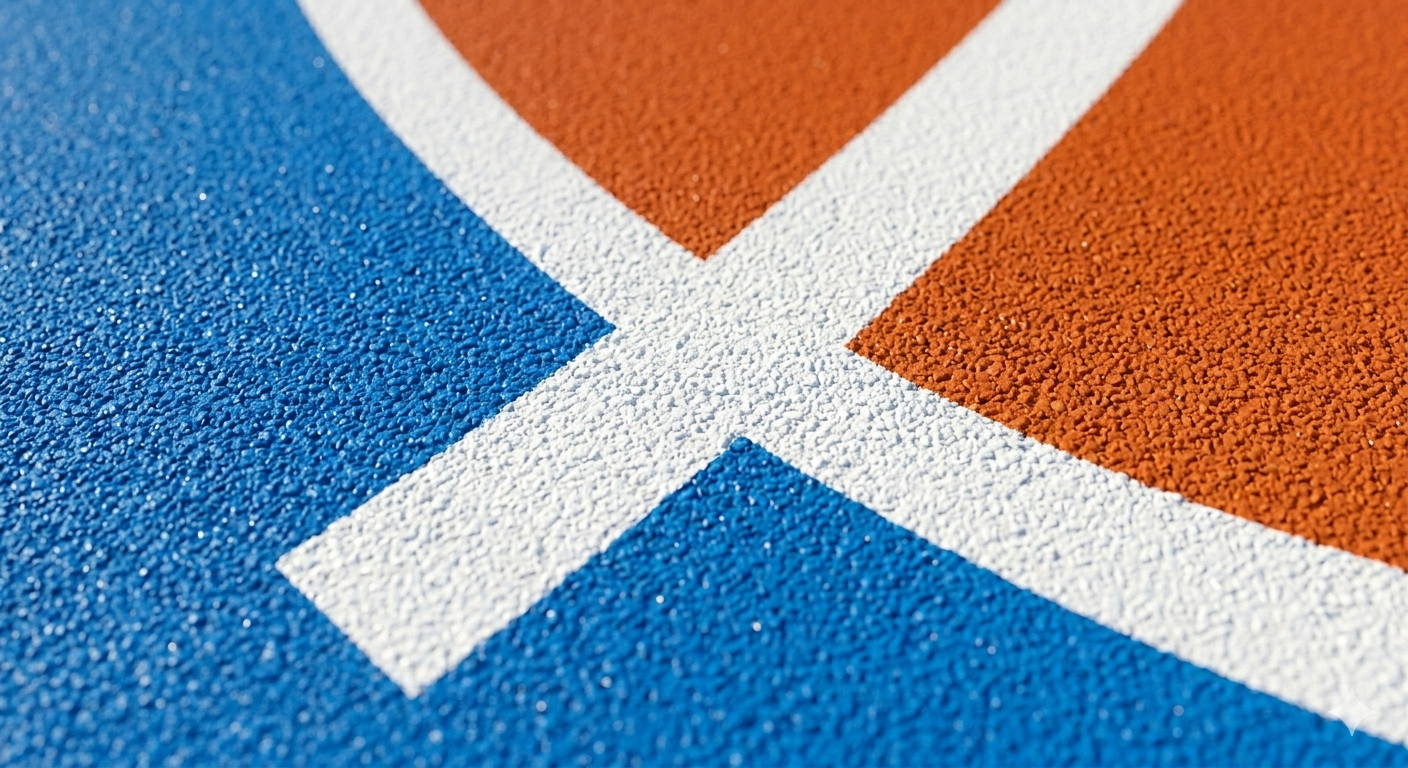
An acrylic hard court is a concrete or asphalt base coated with multiple layers of acrylic paint. Think of it like painting a floor — but with specialised sports coatings engineered for ball bounce, slip resistance, and UV stability. The US Open and Australian Open are both played on acrylic hard courts.
In India, acrylic is the most common choice for tennis and outdoor basketball courts. It's durable, low-maintenance, available in custom colours, and handles Indian weather conditions well. The surface can also be tuned for speed — more gritty texture for a slower game, smoother for a faster one.
Clay courts are the classic red surfaces you see at Roland Garros (the French Open). Traditional clay is made from crushed brick or stone, but modern synthetic clay systems use polymer materials that replicate the playing characteristics — slow ball bounce, high spin — without the extreme maintenance of real clay.
In India, clay is popular for premium tennis facilities and academies. It plays slower than acrylic (giving players more time to reach the ball), is gentler on joints, and is considered the best surface for developing all-round tennis players. However, it requires more maintenance than acrylic, especially post-monsoon.
EPDM (Ethylene Propylene Diene Monomer) is a synthetic rubber material that comes in granule or tile form. It's the colourful, cushioned surface you see in children's play areas, around swimming pools, and on running tracks. It's soft, slip-resistant, UV-stable, and available in any colour.
In India, EPDM is widely used in schools, housing societies, and children's parks. It protects children from injury if they fall, is easy to clean, and handles Indian sun and rain very well. It's also popular for decorative pathways, gym areas, and multi-use recreational zones.
Polyurethane (PUR) is a seamless, poured rubber surface that creates a smooth, resilient playing area. It's the gold standard for professional athletic running tracks — the surface used at the Olympics and World Athletics championships. It offers precise shock absorption and energy return, which helps athletes run faster and reduces injury risk.
In India, PUR tracks are built for state-level and national athletics facilities, SAI centres, and defence sports complexes. It's also used for high-performance outdoor multi-sport courts. It is significantly more expensive than EPDM, but delivers superior performance and longer lifespan for competitive use.
Indoor surfaces don't face rain and UV, but they have their own demands: they must protect joints during jumping and landing, provide the right grip for lateral movement, maintain consistent ball response, and stand up to thousands of hours of use. Here are the main indoor options used in India:
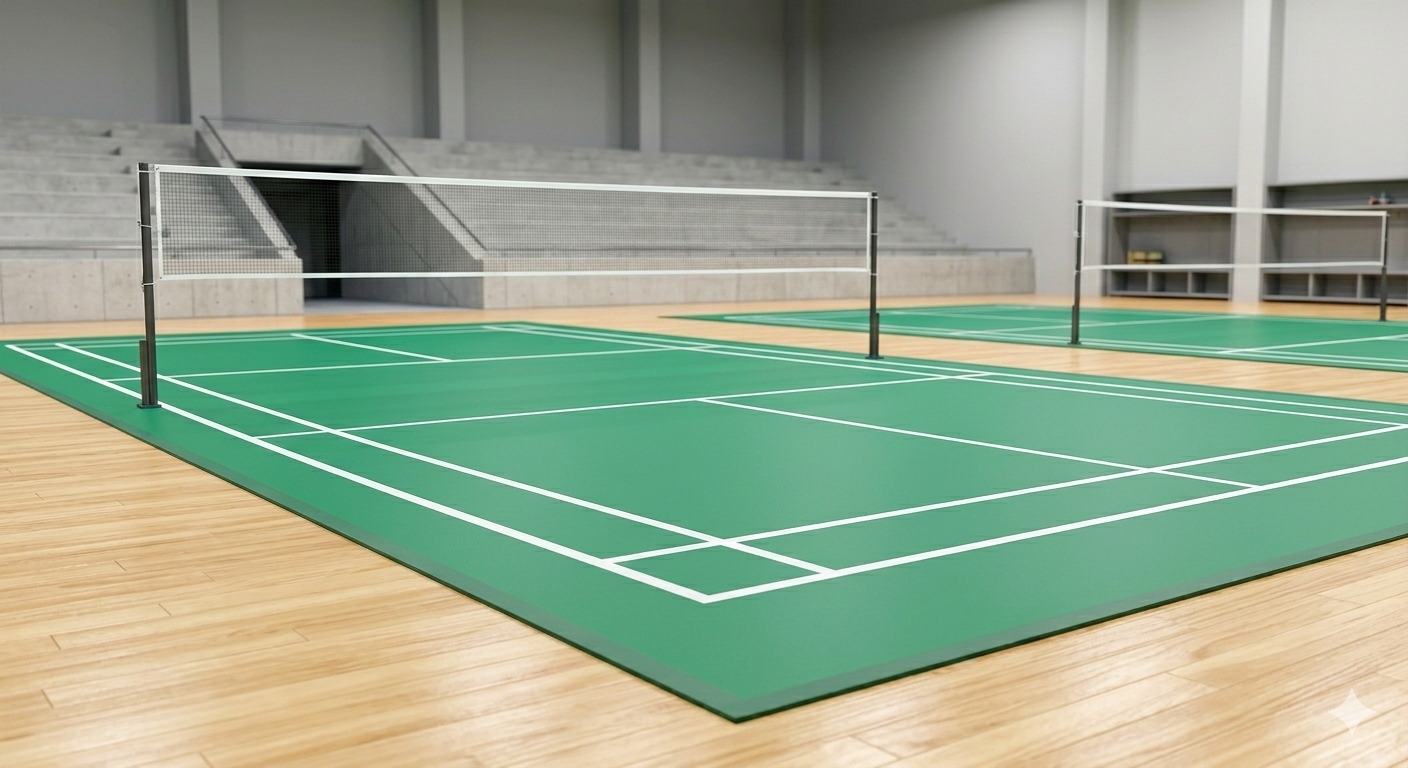
Photo: Indoor PVC vinyl badminton court
PVC sports vinyl is a roll-out flooring system made of engineered polyvinyl chloride. It feels slightly soft underfoot, absorbs shock well, and provides the consistent grip that fast court sports like badminton demand. It's the surface you see in most professional badminton halls — the BWF (Badminton World Federation) approves specific PVC vinyl systems for competition use.
In India, PVC vinyl is the most popular choice for badminton courts in schools, academies, and sports clubs. It's available in multiple colours, easy to clean, and can be laid over most existing concrete floors — making it ideal for retrofit projects and multi-purpose halls.
The classic wooden basketball floor. Hardwood maple flooring is the gold standard for professional basketball and volleyball — it's what NBA courts are built with, and what FIBA (the international basketball federation) specifies for competition use. The wood's natural elasticity gives a distinctive feel that no synthetic surface fully replicates.
In India, hardwood floors are found in premium sports academies, university sports halls, and competition-grade facilities. They're significantly more expensive than synthetic alternatives but are considered essential for venues hosting state-level or national competitions. They also create an immediate impression of professionalism.
Rubber flooring for gyms is made from recycled rubber granules compressed into tiles or rolls. It's heavy, dense, and built to absorb the impact of dropped weights and heavy equipment. If you've been to a gym, you've likely walked on rubber flooring — it's the black or coloured matting in free-weight zones and fitness studios.
In India, rubber flooring is standard in school and corporate gymnasiums, fitness centres, and training rooms. It requires almost zero maintenance, is highly durable under heavy equipment loads, and reduces noise and vibration. It's available in tiles (easier to replace sections) or rolls (more seamless).
A sprung PU floor combines a polyurethane top layer with a shock-absorbing sub-layer system (often foam or spring mechanism beneath). The result is a surface that feels slightly "springy" underfoot — excellent for reducing fatigue and injury during long training sessions. It's popular in multi-sport halls where a single floor needs to serve badminton, basketball, volleyball, and fitness activities.
Use this table as a starting point. The "recommended" surface is the most common choice in India for that sport, but your specific requirements, budget, and usage pattern may point to a different option. When in doubt, get a consultation.
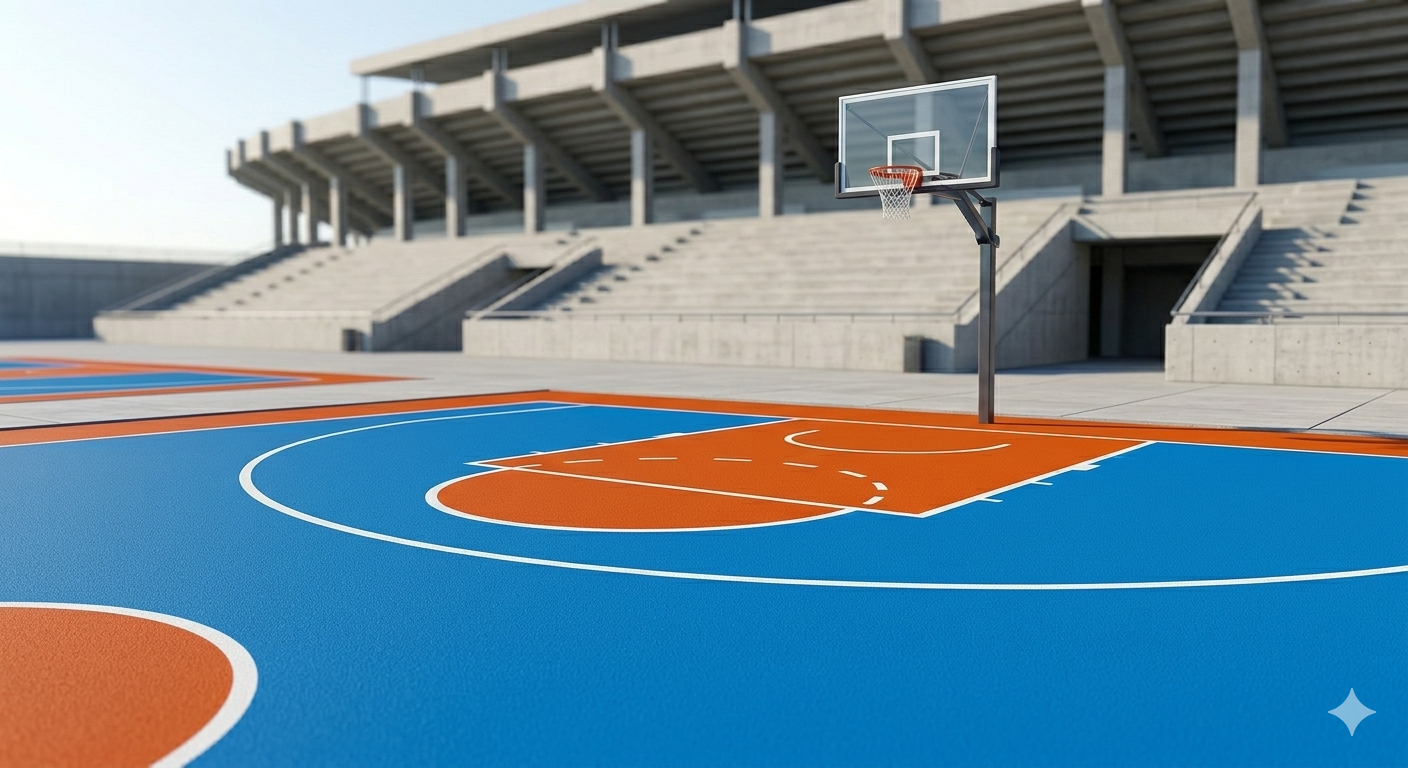
Photo: Sport-by-sport surface guide India
| Sport | Recommended Surface (India) | Alternative | Key Certification | Approx. Cost (Basic) |
|---|---|---|---|---|
| Football / Futsal | Artificial Turf | Natural Grass | FIFA Quality | ₹18–40 lakhs (5-a-side) |
| Cricket (pitch) | Natural Turf / Coir mat | Artificial Turf | BCCI guidelines | ₹2–8 lakhs |
| Tennis (outdoor) | Acrylic Hard Court | Synthetic Clay | ITF Classification | ₹12–22 lakhs |
| Tennis (premium) | Synthetic Clay | Acrylic | ITF | ₹20–40 lakhs |
| Badminton (indoor) | PVC Sports Vinyl | PU Sprung Floor | BWF Approved | ₹3–8 lakhs/court |
| Basketball (outdoor) | Acrylic Hard Court | PP Interlocking | FIBA Level | ₹8–15 lakhs |
| Basketball (indoor) | Hardwood / Maple | PVC Vinyl | FIBA Level | ₹25–55 lakhs |
| Hockey | Artificial Turf (water-based) | Sand-filled turf | FIH Certified | ₹1.5–4 crores |
| Athletic Track (400m) | Polyurethane (PUR) | EPDM | World Athletics | ₹1.5–4 crores |
| Pickleball | Acrylic Hard Court | Cushioned Acrylic | USA Pickleball | ₹4–8 lakhs |
| Padel | Artificial Turf (padel-spec) | — | FIP | ₹30–65 lakhs |
| Squash | Hardwood (glass back) | PVC panel | WSF Certified | ₹15–35 lakhs |
| Gymnasium | Rubber Flooring | PVC Vinyl | EN14904 | ₹5–15 lakhs |
| Children's Play Area | EPDM Rubber | Safety tiles | EN1177 | ₹3–10 lakhs |
| Volleyball (indoor) | PVC Sports Vinyl | Hardwood | FIVB | ₹5–12 lakhs |
💡 Note on certifications: Not every facility needs a federation certification. Schools, housing societies, and corporate campuses typically don't require FIFA or BWF certification unless they plan to host official competitions. Certified surfaces are essential for academies, sports clubs, and government facilities hosting sanctioned events.
Surface selection in Germany or Australia doesn't directly translate to India. Here's what makes India's climate particularly challenging for sports surfaces:
In cities like Hyderabad, Delhi, and Nagpur, summer temperatures regularly exceed 40°C. Surfaces that aren't UV-stabilised will fade, crack, or degrade within a few years. Artificial turf in direct sun can reach surface temperatures of 55–70°C in peak summer — something worth planning around for daytime use.
India's monsoon brings 4–6 months of heavy, intermittent rainfall. Drainage design is not optional — it's critical. Any surface installed without proper sub-base drainage will hold water, develop mould, and deteriorate quickly. The sub-base (the layers of material beneath the playing surface) is often what determines a surface's lifespan more than the surface itself.
Cities like Mumbai, Chennai, and Kochi have high year-round humidity. For indoor wooden surfaces, this can be a significant challenge — hardwood expands and contracts with moisture, and without proper climate control (HVAC), even a premium maple floor can warp within a few seasons. Indoor surfaces in coastal India generally benefit from PVC or PU alternatives unless HVAC is installed.
Cities like Dehradun and Shimla see significant seasonal temperature ranges. Surfaces need to handle thermal expansion without cracking or delaminating. The bituminous sub-base preparation matters enormously in such locations.
In India, always prioritise UV-stabilised surfaces, design the sub-base for maximum drainage, and factor in the regional climate when selecting indoor surfaces. A surface that lasts 15 years in Bengaluru might need replacement in 8 years in coastal humidity without proper climate management.
Budget is often the deciding factor. Here's how to think about surface selection at different investment levels:
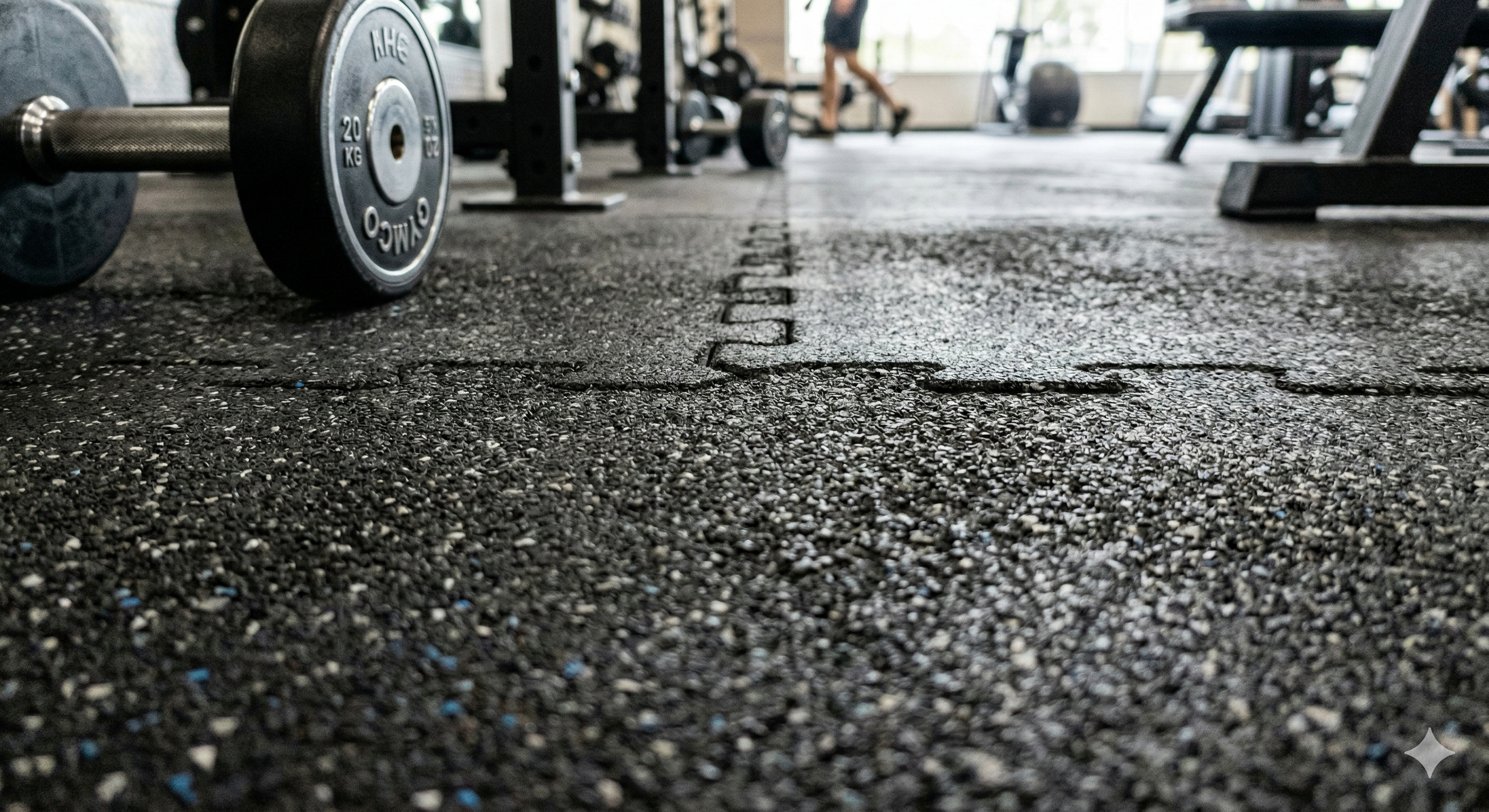
Photo: Sports flooring budget guide India
For smaller budgets, focus on a single-court facility with a functional surface rather than a certified one.
At this level, you can build full-spec facilities for most individual sports, or a small multi-sport complex.
Multi-sport facilities, certified venues, and commercial sports complexes fall in this range.
📌 Important: These are indicative ranges. Actual costs depend on your city, site conditions, existing infrastructure, surface grade, allied works (lighting, fencing, roofing), and finishing choices. The only way to get a reliable number is a site-specific quote from a specialist contractor.
Here's what to remember from this guide:
Surface choice is strategic, not just cosmetic. It determines performance, longevity, maintenance cost, and whether your facility can host official competitions.
India's climate is demanding. UV resistance, drainage design, and sub-base quality are non-negotiable for outdoor surfaces. Indoor wooden surfaces need humidity management in coastal cities.
There is no single "best" surface. The right surface depends on your sport, usage frequency, budget, user profile (recreational vs. competitive), and location. A chart or brochure can't tell you what to choose — a site survey and expert consultation can.
Certifications matter for competition venues. For schools, housing societies, and corporates, a non-certified but well-built surface is perfectly fine. For academies and government facilities hosting events, federation certification is worth the additional investment.
Maintenance is what separates a 10-year surface from a 15-year surface. Even the best surface will degrade faster than expected without regular, season-appropriate maintenance.
Our team has built 200+ facilities across India. Share your project details and we'll recommend the right surface, give you an honest budget estimate, and explain exactly what to expect at every stage.