
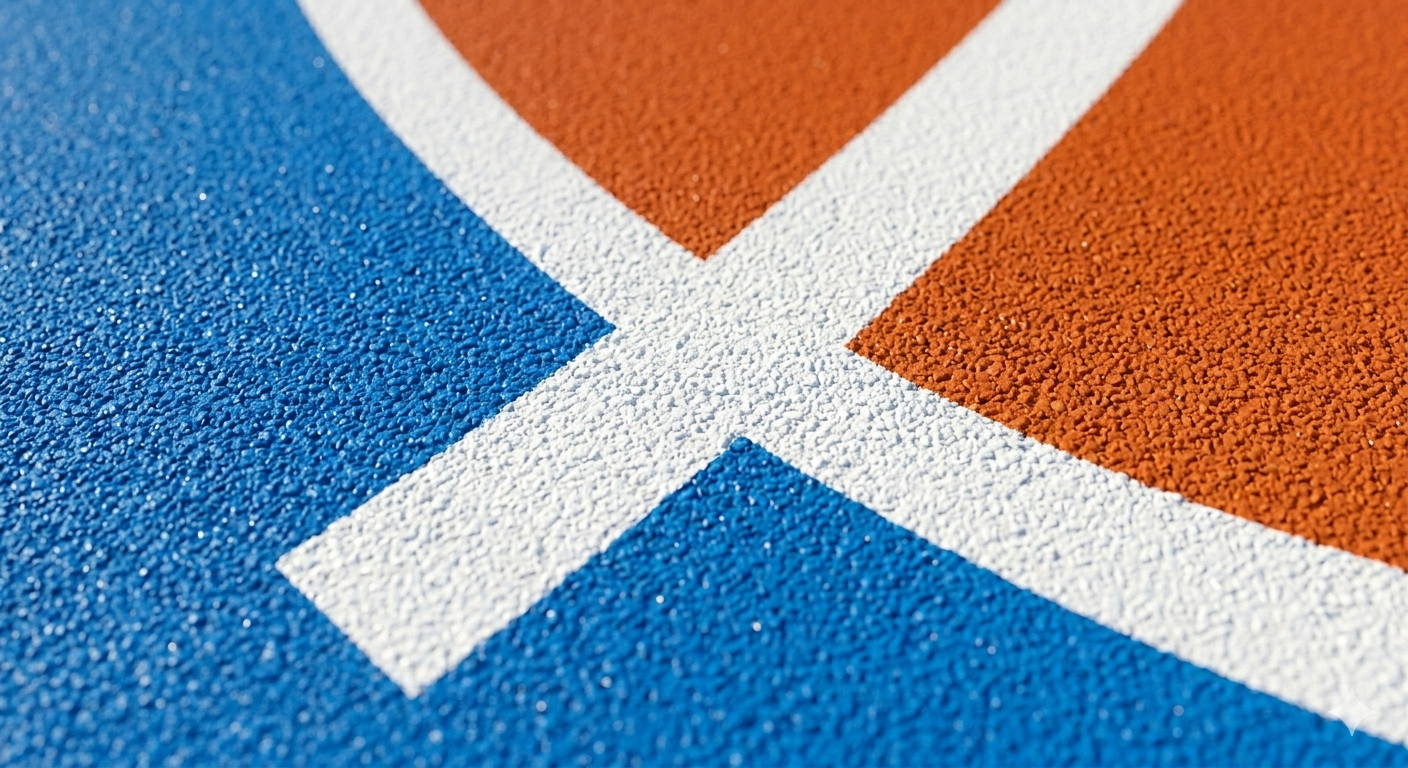
One of the first decisions any sports facility owner faces is this: should the court be indoors or outdoors? It affects your budget, your usable hours, your surface options, and ultimately how much revenue the facility can generate. This guide walks you through every factor — in plain language, with real Indian context.
When people say "indoor court" and "outdoor court," they often mean more than just whether there's a roof overhead. The two involve fundamentally different construction approaches, surface requirements, maintenance regimes, and usage patterns. Understanding these differences upfront saves a lot of expensive surprises later.
An outdoor court sits directly under the sky. It needs to handle rain, heat, UV radiation, wind, and dust on a daily basis. The surface must drain water quickly, resist UV degradation, and stay playable across a wide temperature range. The sub-base engineering — the layers of material beneath the playing surface — is as important as the surface itself.
An indoor court, by contrast, is protected from the elements. This opens up surface options (like hardwood or cushioned PU) that simply cannot survive outdoors in India. But it also means a significantly larger upfront investment in civil construction: the building shell, roof structure, lighting, ventilation, and sometimes HVAC. The building itself often costs more than the court inside it.
For outdoor courts, your main investment is in the surface and sub-base. For indoor courts, your main investment is in the building structure — the court surface is often just 20–35% of the total project cost.
India's climate makes the indoor vs outdoor decision more consequential than it would be in, say, the UK or Germany. The reason is that India has not one climate but many — and each creates very different constraints for outdoor sports facilities.

Outdoor artificial turf courts must be designed for Indian monsoon drainage and UV exposure.
India's monsoon runs from roughly June to September across most of the country, with some regions (like the Northeast and Kerala) getting 6+ months of heavy rain. An outdoor court with poor drainage can be completely unusable for weeks at a time. A well-drained outdoor court with proper sub-base engineering can return to playable condition within 30–60 minutes of rain stopping. The drainage design of your sub-base is not a secondary concern — it determines how many days per year your outdoor facility is actually usable.
In Rajasthan, Telangana, UP, and parts of Maharashtra, peak summer temperatures regularly cross 42–45°C. Outdoor courts in these regions face two problems: surface degradation from UV radiation, and user comfort. Artificial turf in direct afternoon sun can reach surface temperatures of 55–70°C — far too hot for casual play. Acrylic hard courts, if not properly UV-stabilised, will fade and chalk within 3–5 years. For hot-climate regions, shading structures or roof covers over outdoor courts can significantly extend usable hours and surface lifespan.
Cities like Mumbai, Chennai, Kochi, and Vizag have high year-round humidity. This matters especially for indoor facilities: wooden sports floors (hardwood, maple) expand and contract with moisture, and without HVAC, even a ₹50 lakh maple floor can warp or develop gaps within a couple of seasons. In coastal India, PVC or PU-based indoor surfaces are often the more practical choice unless climate control is part of the building design.
Delhi, Punjab, Haryana, and UP face cold, foggy winters with temperatures dipping to 3–8°C from December to February. Outdoor courts in these regions see a sharp drop in usage during this period. An indoor facility with lighting and heating maintains year-round revenue potential — a meaningful factor in ROI calculations for commercial facilities.
📌 Rule of thumb: If your city gets more than 1,000mm of annual rainfall, or if summer temperatures exceed 40°C regularly, the drainage engineering and surface UV-stability of an outdoor court deserve as much budget attention as the surface itself. Skimping on sub-base or surface quality in Indian climates is the most common cause of premature court failure.
Not every sport can be played comfortably outdoors in India all year round. Here's a practical breakdown by sport:
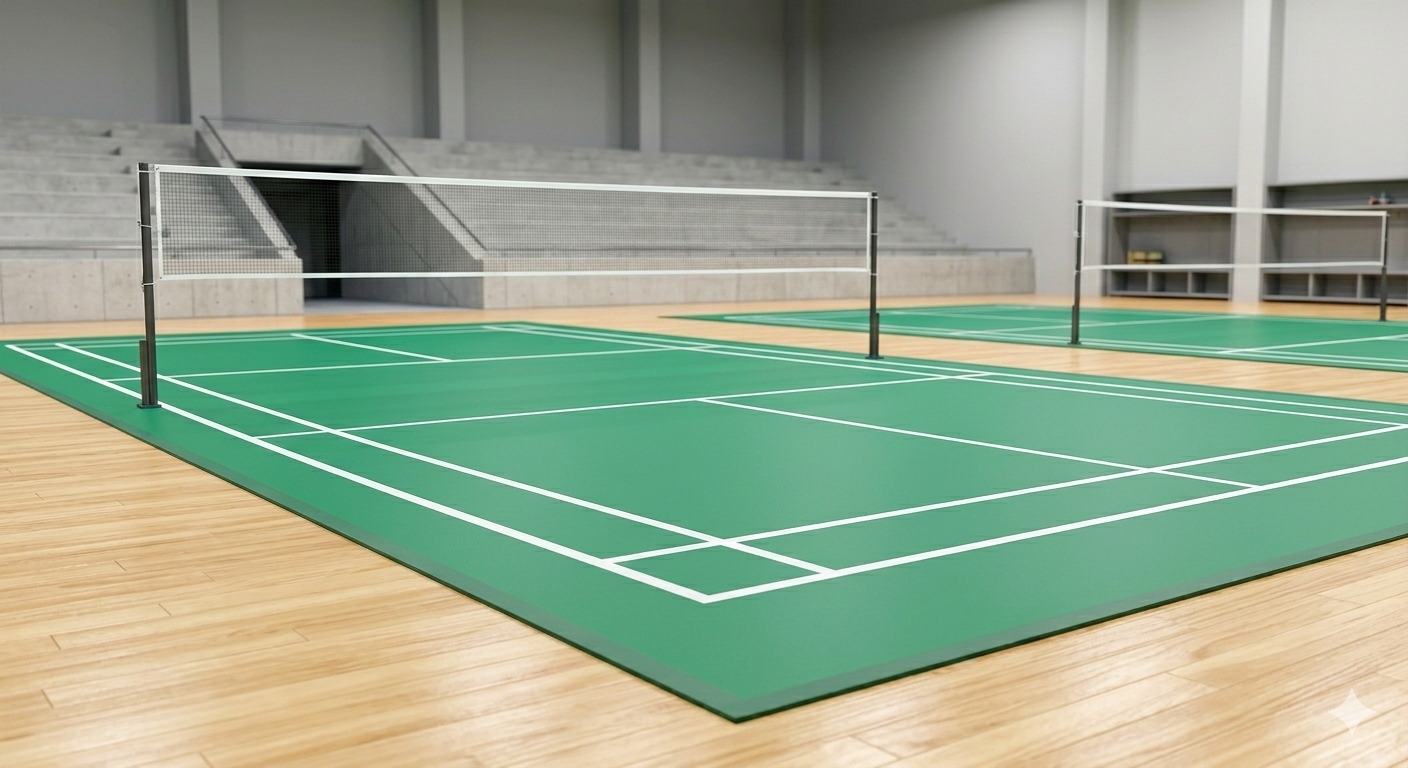
Badminton is almost always played indoors — wind makes outdoor play impractical at any level above casual.
| Sport | Recommended Setting | Reason | Can It Be Outdoor? |
|---|---|---|---|
| Badminton | Indoor only | Wind makes shuttlecock play impossible | No |
| Basketball | Both viable | Outdoor works for recreational play; indoor preferred for academies/competition | Yes |
| Tennis | Both viable | Outdoor is standard globally; indoor extends playable hours in monsoon/summer | Yes |
| Football / Futsal | Outdoor preferred | Space requirements; indoor futsal halls are expensive to construct | Yes |
| Volleyball | Both viable | Beach volleyball is outdoor; competitive indoor volleyball is always indoors | Yes |
| Squash | Indoor only | Enclosed court structure is integral to the sport | No |
| Padel | Both viable | Can be open-air or covered; covered courts extend use significantly in India | Yes |
| Cricket (nets) | Both viable | Outdoor with weather protection netting is most common; indoor academies are growing | Yes |
| Gymnasium | Indoor only | Equipment cannot be exposed to weather | No |
| Athletic Track | Outdoor (most cases) | 400m indoor tracks are only viable for large institutions | Yes |
| Pickleball | Both viable | Outdoor very popular; indoor makes it year-round | Yes |
The setting — indoor or outdoor — determines which surfaces are even available to you. Some surfaces perform excellently in one setting and fail completely in the other.
Artificial turf is primarily an outdoor surface. While indoor artificial turf installations exist for specific applications (like indoor cricket nets), the heat, UV-stabilisation, and drainage characteristics of turf are designed for outdoor use. Similarly, acrylic hard courts — the most popular court surface for outdoor tennis, basketball, and multi-sport courts — are engineered to handle rain, UV, and temperature variation. They are rarely used indoors because they lack the cushioning and acoustic properties desired in enclosed spaces.
Hardwood (maple or engineered wood) sports floors are the gold standard for indoor basketball, volleyball, and multi-sport halls. They offer excellent ball response, shock absorption, and player comfort — but cannot tolerate outdoor exposure for even a single monsoon season. PU sprung flooring, popular for badminton academies and multi-sport halls, is similarly an indoor-only surface. These materials are sensitive to moisture and temperature swings that outdoor environments in India guarantee.
PVC sports vinyl (also called sports vinyl or LVT for sports) can be used indoors, but outdoor-rated PVC formulations also exist for covered but open-sided structures. PU (polyurethane) flooring in its outdoor-rated form is used for athletic tracks and outdoor multi-sport courts, while indoor PU formulations (sometimes called "sprung PU") are used for badminton and gymnastics. The same material family, but very different products — so always specify indoor or outdoor when requesting quotes.
Never install an indoor-spec surface in an outdoor location to save money. The surface will degrade within 1–2 monsoon seasons, costing far more in replacement than the original saving. Durosport always specifies surfaces appropriate to the installation environment.
The cost difference between indoor and outdoor courts is significant — but the breakdown is often surprising to first-time facility owners. The surface itself is rarely the biggest line item for an indoor court.
Acrylic hard court or interlocking PP tiles over concrete base. Includes civil base, surface, fencing, and basic lighting. No building shell required. This type of court works well for housing societies, schools, and corporate campuses where weather risk is acceptable.
PVC sports vinyl or PU sprung floor inside a prefabricated steel structure or permanent building. Building shell (35–50 lakh), surface (10–20 lakh), lighting (5–10 lakh). The surface itself is a minority of the total budget. Revenue potential is significantly higher with year-round playability.
Acrylic hard court on properly engineered base, with perimeter fencing and basic pole lighting. Most club-level and school tennis courts in India are outdoor acrylic and are well-suited to the climate with proper drainage design.
Adds a shade structure or full enclosure, significantly extending usable hours in peak summer and monsoon. Popular in premium clubs and academies. The cover typically costs ₹12–28 lakh depending on structure type (tension fabric, steel truss, or full enclosure).
Full-size acrylic court with markings, backboards, and perimeter lighting. Suitable for schools, parks, and community facilities. Surface lasts 10–15 years with good maintenance. Lower initial cost, but limited usability during heavy rain.
Full multi-sport hall with sprung floor or PVC sports vinyl, LED sports lighting, ventilation, and a proper building structure. Can accommodate badminton, basketball, and volleyball with floor marking changes. Largest capital investment, but highest revenue ceiling for commercial operators.
There's no single right answer — it depends on your budget, location, sport, user profile, and business model. Here's a practical framework to help you decide.
💡 The hybrid approach: Many of India's best-run facilities combine both. A covered but open-sided structure — essentially a roof without full walls — gives meaningful weather protection at a fraction of the cost of a fully enclosed building. For badminton, this doesn't work (wind is an issue), but for tennis, basketball, padel, and multi-sport courts, a good shade structure can deliver 80% of the benefit of a full indoor facility at 30–40% of the cost.
Also consider your timeline. Outdoor courts can often be completed in 4–10 weeks. Indoor facilities involving permanent structures require civil approvals, foundation work, and building construction — often 6–18 months from concept to play-ready. If you need to open quickly or generate early cash flow, an outdoor court while planning a future indoor facility is a common and sensible approach.
For any serious or regular play, yes — indoor is essentially mandatory for badminton. Wind disrupts the shuttlecock so significantly that even a slight breeze makes the game unplayable. Outdoor badminton exists only at the most casual, recreational level. If you're building a badminton facility for an academy, club, or commercial use, an indoor structure is not optional — it's the product.
Yes, this is possible — and it's a strategy some facility owners use to manage cash flow. Build the outdoor court first, generate revenue, then add a roof structure and upgrade the surface over time. The key is to plan for it from the start: ensure the civil base and surrounding infrastructure can accommodate a future roof structure without major rework. Talk to your contractor about this approach before construction begins so the foundation is designed accordingly.
For most schools, a combination of outdoor courts (for football, basketball, cricket, tennis) and a single indoor multi-sport hall (for badminton, volleyball, and PE sessions) is the ideal setup. Budget-wise, schools often start with outdoor courts and add indoor infrastructure in subsequent phases. The outdoor sports tend to have larger student participation, while indoor courts enable year-round PE regardless of weather — valuable in monsoon-heavy regions.
Significantly. A well-built outdoor acrylic court in Bengaluru (moderate climate) can last 12–15 years with proper maintenance. The same specification in coastal Mumbai or humid Kerala may show surface degradation in 8–10 years without UV-protective top coats and annual maintenance. In extreme cases — poor drainage, UV exposure without top coat, and no maintenance — outdoor courts in India have failed in as little as 4–5 years. The lesson: in Indian conditions, a ₹2–3 lakh investment in better sub-base drainage and UV-rated surface coating can extend court lifespan by 4–6 years.
Indoor courts generally command higher per-hour rental rates (₹600–₹2,000/hour for badminton vs ₹300–₹800/hour for outdoor courts) and maintain occupancy year-round, including during monsoon and extreme summer months. However, the higher capital cost (often 3–5x an outdoor facility) means the payback period is also longer — typically 3–6 years for a well-run indoor facility vs 2–4 years for outdoor. The best ROI model is often a mixed facility: outdoor courts generating early revenue while an indoor hall serves the premium segment. A detailed feasibility analysis for your specific location and sport mix is always worthwhile before committing to either format.
Our team has built 200+ facilities across India — from simple outdoor courts to full multi-sport indoor complexes. Tell us about your project and we'll give you an honest, experience-backed recommendation.