PU systems balance elasticity and durability. Thickness and aggregate choice control traction and performance.
Surface sealing protects against UV and wear.

Outdoor Surface
PU systems used for seamless outdoor courts and tracks with durable, elastic play characteristics.
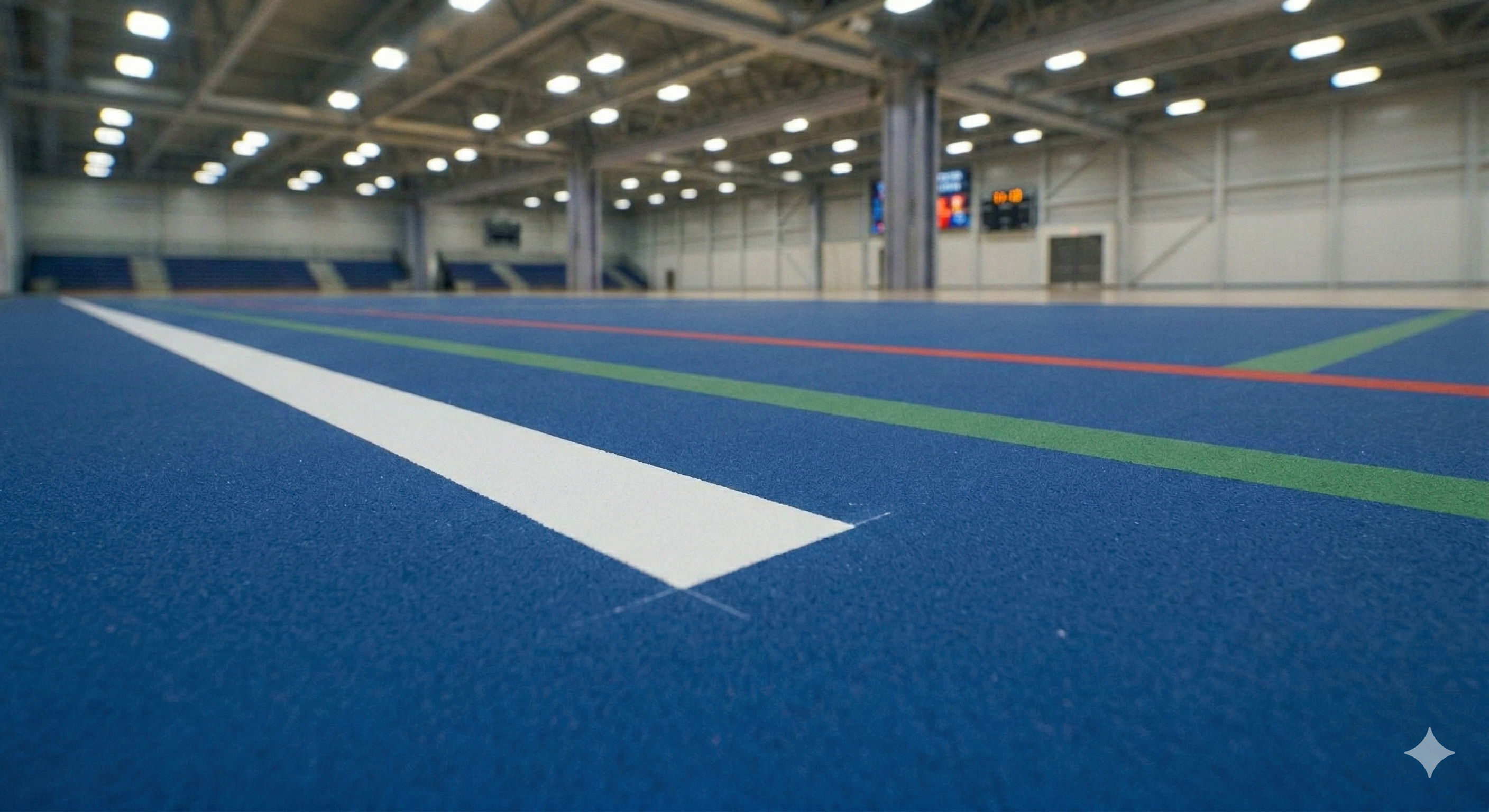
Polyurethane (PUR) is the highest-performance surface system used for competition athletic tracks. It is a full-pour system — liquid polyurethane is mixed and applied on-site in multiple layers, creating a seamless, precision surface. PUR tracks are used in Olympic stadiums, World Athletics certified venues, and national championship facilities.
The PUR system consists of a base layer (porous or compact) and a textured top coat. The base provides the shock absorption and energy return that allows athletes to sprint faster with less fatigue. The textured top coat provides the grip coefficient specified by World Athletics.
India's best athletic tracks — at SAI centres, state sports authorities, and premier universities — are built with PUR. It is the standard for any facility targeting Khelo India, national, or international competition hosting.
| Parameter | Detail |
|---|---|
| Material | Two-component polyurethane with EPDM granule texture coat |
| System Types | Full-pour porous (draining); Full-pour compact (non-draining with channel drainage) |
| Total Thickness | 13mm standard (porous); 13–25mm (sandwich systems) |
| Lifespan | 15–20 years |
| India Cost Range | ₹2,000 – 4,500/sqm installed (full 400m track cost: ₹2–4 Crore) |
| Certifications | World Athletics Class 1, Class 2, Class 3 |
| Maintenance | Pressure washing (annual); no painting required for embedded colour |
| Performance | World Athletics specified friction (0.5–0.9) and energy return |
PU systems balance elasticity and durability. Thickness and aggregate choice control traction and performance.
Surface sealing protects against UV and wear.
World Athletics (formerly IAAF) classifies tracks into Class 1 (international competition including World Championships, Diamond League), Class 2 (continental and national competition), and Class 3 (regional and national competition). Class 1 requires on-site testing by a WA-approved testing agency. EPDM tracks typically achieve Class 3; PUR tracks achieve Class 1 or 2. Khelo India venues typically require Class 2 or Class 3 specification.
EPDM is a pre-manufactured rubber tile system bonded to the sub-base; PUR is a liquid poured on-site that cures to form a seamless surface. PUR has superior performance characteristics — specifically better energy return (important for sprint times) and more precise surface friction control. PUR is significantly more expensive. For school and college tracks, EPDM is usually sufficient; for national competition venues, PUR is required.
Not typically. PUR needs to be applied over a prepared asphalt or concrete base to achieve the correct bonding and performance. Laying PUR over existing EPDM is not technically sound. If upgrading from EPDM to PUR, the EPDM tiles need to be removed and the base prepared fresh.
A sandwich system PUR track consists of a thick base layer of SBR rubber or PUR foam (for shock absorption) covered by a thin PUR full-pour top layer. This system provides excellent energy return and shock absorption, and is commonly specified for tracks where athlete comfort and performance are paramount. It is slightly more expensive than a standard full-pour porous PUR system.
A full 400m × 8-lane PUR track takes approximately 6–10 weeks for surface installation (after the asphalt base is ready). The polyurethane requires careful application in specific temperature and humidity conditions — laying in the peak Indian summer heat (40°C+) or during heavy rain is not possible. Project scheduling accounts for suitable climate windows.
Tell us about your project and we will recommend the right surface and standards.
Request a call