Synthetic clay mimics the sliding feel of natural clay while reducing daily maintenance. Surface texture is adjusted to achieve the desired pace.
Drainage layers help keep playability consistent after rain.

Outdoor Surface
All-weather clay-like systems that reduce maintenance while keeping the softer, sliding-friendly play of traditional clay.
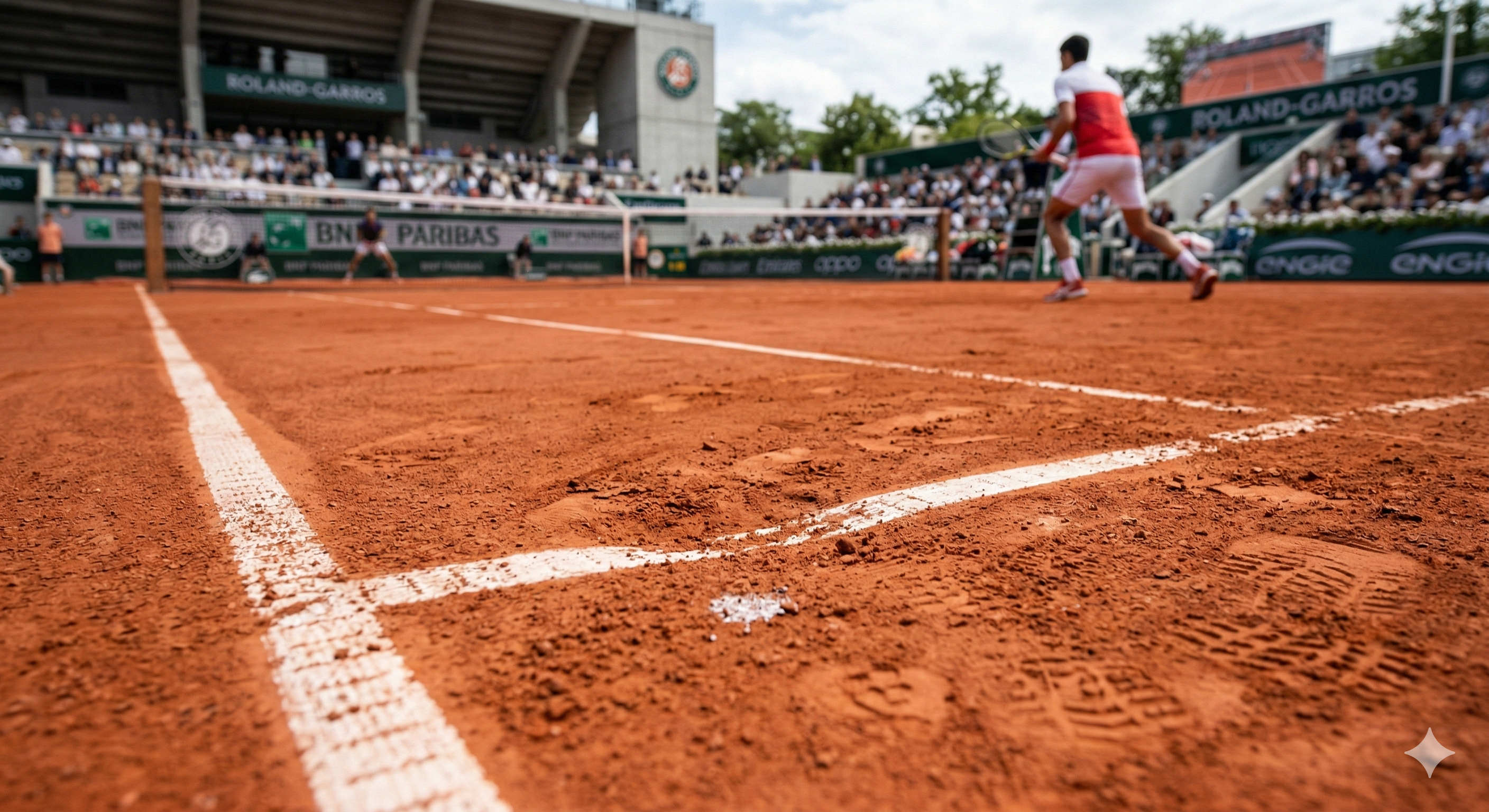
Synthetic clay is an artificial tennis surface designed to replicate the playing characteristics of natural red clay (like Roland Garros). It consists of a base layer of artificial turf with a sand or brick-dust infill that gives it the signature reddish-brown colour and the slow, high-bouncing rally game that clay courts are famous for.
Unlike natural clay, synthetic clay requires no daily watering, no rolling, and no line brushing. It can be played on immediately after rain (natural clay can take hours or days to dry after heavy rain). This makes synthetic clay the practical choice for India's climate — you get the playing feel of clay with the convenience of an all-weather surface.
Synthetic clay is particularly popular in tennis clubs, academies, and private villas where players prefer the slower game and joint-friendliness of clay, but cannot afford the maintenance demands of natural clay. Durosport is an authorised installer of multiple ITF-classified synthetic clay systems.
| Parameter | Detail |
|---|---|
| Surface System | Short-pile artificial turf with brick-dust or sand infill |
| Pile Height | 13–16mm |
| Infill | Brick-dust (red clay colour) or silica sand with colouring |
| ITF Classification | Slow (Category 4) — similar to natural clay |
| Lifespan | 8–12 years |
| India Cost Range | ₹900 – 1,600/sqm (installed) |
| Maintenance | Brushing (weekly), infill top-up (annual), marking repaint (biannual) |
| Water Required | No watering needed — playable in all weather |
Synthetic clay mimics the sliding feel of natural clay while reducing daily maintenance. Surface texture is adjusted to achieve the desired pace.
Drainage layers help keep playability consistent after rain.
Synthetic clay closely replicates natural clay in terms of ball speed (slow) and bounce height (high). The sliding experience is similar but not identical — synthetic clay allows some sliding but does not give the exact same sliding feel as natural clay courts. For training purposes, synthetic clay is an excellent substitute for natural clay in Indian conditions.
Yes — one of the biggest advantages of synthetic clay over natural clay. Rain drains through the turf and base immediately. You can play within minutes of rain stopping, compared to several hours for a natural clay court. This dramatically increases court utilisation, especially in India's monsoon season.
Weekly brushing with a stiff-bristle broom or mechanical brusher keeps the infill evenly distributed and fibres upright. Slide marks from players should be brushed out after each session. Annual infill top-up replaces brick-dust or sand that has been displaced. Line markings are resprayed every 2 years.
Yes — ITF classified synthetic clay systems are approved for club and regional competition. State and national tournaments governed by AITA (All India Tennis Association) may have specific surface requirements. Contact us for advice on the appropriate specification for your intended competition level.
Yes — synthetic clay can be installed indoors as well as outdoors. Indoor synthetic clay is common in premium tennis academies. Ventilation is important to manage the fine brick-dust particles. UV exposure (which helps maintain the surface) is not required for synthetic clay performance.
Tell us about your project and we will recommend the right surface and standards.
Request a call