Acrylic systems are layered to achieve uniform texture and color. The finish is tuned for ball response and slip control.
Proper crack management extends lifespan and prevents water intrusion.

Outdoor Surface
Layered acrylic coating systems applied over asphalt or concrete to deliver durable, fast-playing courts with UV stability.
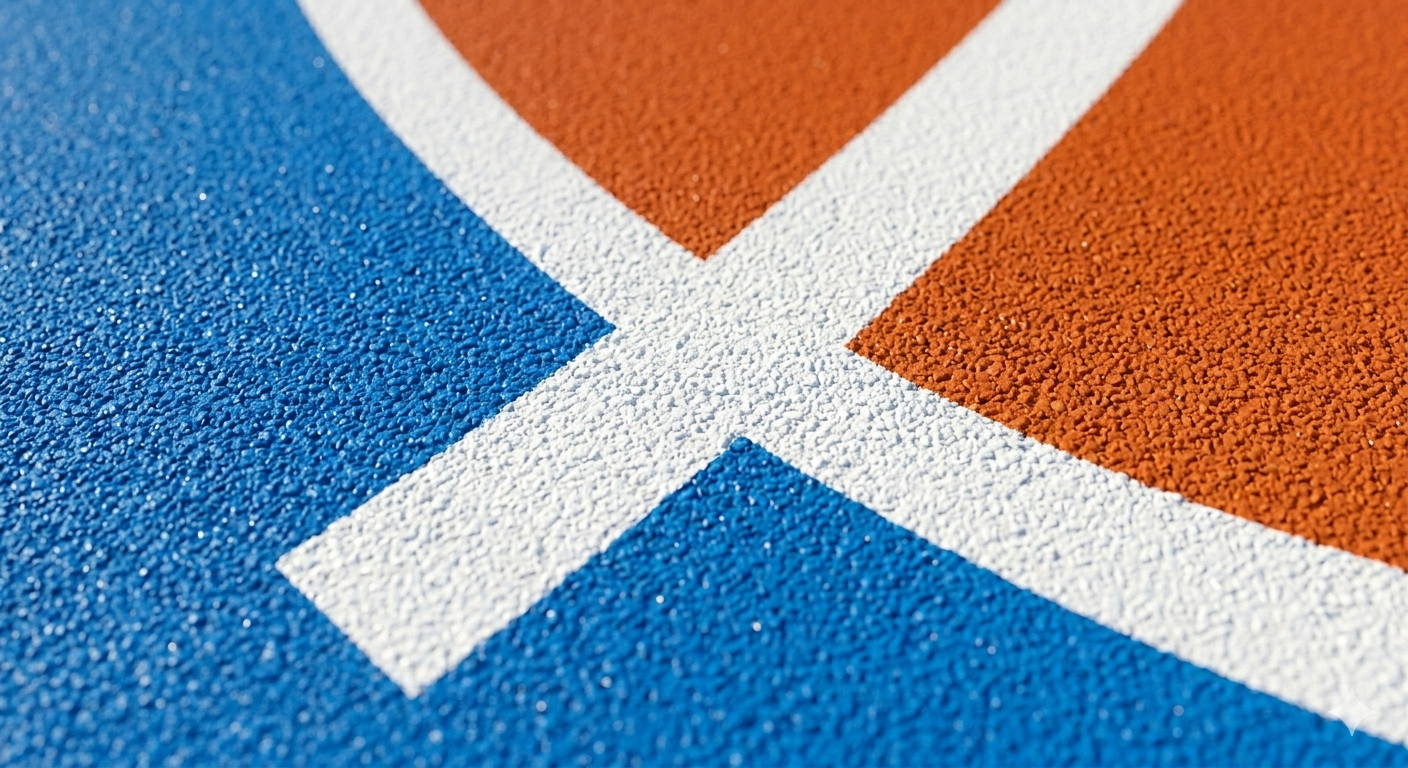
Acrylic hard court is the most widely used outdoor sports surface in the world — you'll find it on tennis courts (including all four Grand Slams except Wimbledon and Roland Garros), basketball courts, netball courts, pickleball courts, and multi-sport areas. It consists of multiple layers of acrylic coating applied over a concrete or asphalt base.
The textured top coat provides consistent ball bounce, good player traction, and a clean, professional appearance. The colour of the court (typically blue, green, red, or terracotta) is created by the acrylic pigment and can be customised. White or yellow line markings are painted over the top coat.
In India, acrylic hard court is the most popular choice for outdoor tennis, basketball, and multi-sport courts in schools, housing societies, and clubs — because it is affordable, low-maintenance, highly durable, and drains quickly after rain.
| Parameter | Detail |
|---|---|
| Surface System | Multi-layer acrylic coating on asphalt or concrete base |
| Number of Coats | Typically 4–8 coats (levelling, textured base, colour coats, line marking) |
| Surface Texture | Sand-filled acrylic — slow to medium speed (ITF Category 3) |
| Lifespan | 10–15 years before recoating; 20+ years for the base |
| India Cost Range | ₹300 – 700/sqm depending on base condition and number of coats |
| Certifications | ITF Classified (tennis), FIBA Approved (basketball) |
| Maintenance | Sweeping (weekly), pressure washing (quarterly), recoating (every 5–8 years) |
| Drainage | Excellent — 1% crossfall drains water within 30 minutes of rain |
Acrylic systems are layered to achieve uniform texture and color. The finish is tuned for ball response and slip control.
Proper crack management extends lifespan and prevents water intrusion.
Yes — if the existing concrete base is in good condition (no major cracks, level, and clean), acrylic can be applied directly. We assess the base for structural integrity, levelness (tolerance ±3mm over 3m), and surface contamination before proceeding. Crack repairs and levelling compounds are applied as needed before the acrylic system.
Acrylic sports surface systems are multi-layer coatings specifically engineered for sports use — they include sand for texture and traction, UV-stable pigments for colour fastness, and flexible binders that allow the coating to expand and contract with temperature changes without cracking. Regular paint will peel, fade, and crack rapidly in sports use. Only ITF/FIBA approved acrylic systems should be used.
Recoating (not full replacement) is recommended every 5–8 years — this refreshes the colour, texture, and line markings. The cost is approximately ₹100–200/sqm for a recoat. A full acrylic resurfacing (stripping and relaying from base upwards) is needed every 15–20 years or when the base itself degrades.
Multiple sports can be marked on the same acrylic surface using different colours. A popular combination is tennis (white lines), basketball (yellow lines), and badminton (red lines) on a single multi-sport court. The base colour and marking colours need to provide sufficient contrast for each sport.
Yes — acrylic is one of the best surfaces for school multi-sport areas. It's durable, requires minimal maintenance, is easy to clean, and provides clear markings for PE lessons. Schools typically choose a dual-colour layout (e.g. green court with blue key areas) with multiple sport markings for maximum versatility.
Tell us about your project and we will recommend the right surface and standards.
Request a call