
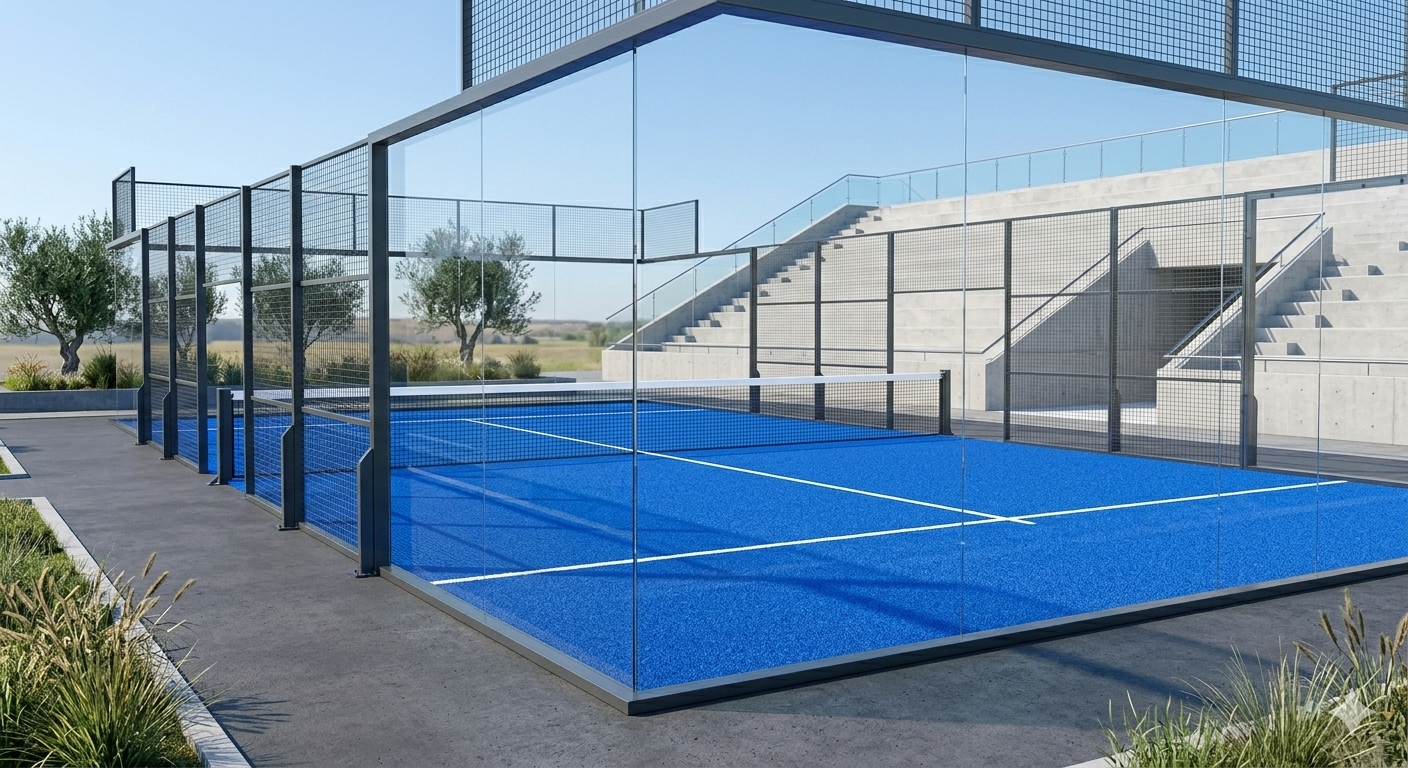
Padel is the fastest-growing racquet sport in India right now. If you're thinking about building one — whether for a club, hotel, housing society, or commercial sports facility — this guide gives you real INR figures, a breakdown of what drives costs up or down, and honest advice on what to budget for.
Padel is a racquet sport played on an enclosed court approximately 20 metres long by 10 metres wide. The court is surrounded by glass walls and metal mesh fencing, and the ball can be played off the walls — much like squash. It is played in doubles, and the scoring system mirrors tennis.
Unlike a standard tennis or badminton court, a padel court is a complete structural system: the glass panels, metal frame, surface, lighting, and net are all integrated. You cannot simply lay a surface on an existing concrete floor and call it a padel court — the enclosure structure is the defining element of the sport. This is why padel courts have a higher minimum cost than many other court types.
The sport exploded in popularity across Spain, Argentina, and the Middle East over the past decade, and has been growing rapidly in India since 2022. Cities like Bengaluru, Mumbai, Hyderabad, Delhi, and Pune now have active padel communities, and commercial operators are increasingly adding padel alongside tennis and squash as a premium offering.
A padel court is a complete structural product — not just a surface. The glass enclosure, steel frame, and integrated lighting are all part of the unit. This makes padel courts more capital-intensive than most other sports installations, but also more turnkey and predictable to price.
The honest answer for 2026: a single padel court in India costs between ₹18 lakhs and ₹55 lakhs all-in, depending on the type of court structure, glass specification, surface quality, and site conditions. Here is how that breaks down by category:
| Court Type | Structure | All-In Cost (INR) | Best For |
|---|---|---|---|
| Classic Outdoor Padel | Steel frame + partial glass + mesh | ₹18 – ₹28 lakhs | Clubs, housing societies, schools |
| Panoramic Outdoor Padel | Steel frame + full panoramic glass walls | ₹28 – ₹42 lakhs | Commercial clubs, hotels, premium venues |
| Indoor Classic Padel | Classic frame installed under existing roof | ₹22 – ₹35 lakhs | Sports centres with existing halls |
| Indoor Panoramic Padel | Full panoramic glass, indoor installation | ₹35 – ₹55 lakhs | Premium clubs, five-star hotels |
These figures include the structural frame, glass/mesh panels, playing surface, net and post system, and standard LED floodlighting. They do not include civil works (foundation, slab), roofing for indoor installations, or site-specific charges like transportation to remote locations.
📌 Important: Padel court prices in India vary significantly by supplier. Imported European courts (common in premium installations) cost considerably more than locally manufactured systems. Both can perform well — the right choice depends on your budget, expected player volume, and whether you need international certification.
Understanding what you actually get for your money is just as important as knowing the total. A complete padel court installation covers the following components:
A complete padel court is a structural system — frame, glass panels, surface, and lighting are all integrated.
The frame is the skeleton of the padel court. It is typically constructed from hot-dip galvanised steel, designed to hold the glass panels and mesh in position while withstanding wind loads and the lateral forces from ball impacts. Frame quality varies — look for minimum 2mm wall thickness on main structural members and a corrosion protection warranty of at least 5 years for outdoor installations. Cheaper imported frames sometimes use thinner steel or inadequate galvanisation, which can lead to corrosion within 3–4 years in India's coastal or humid climates.
Classic padel courts use a combination of glass on the end walls and metal mesh fencing on the side walls. Panoramic courts use glass on all four walls, giving a more visually striking appearance and better spectator viewing — which is why they are preferred for commercial venues.
Glass should be tempered safety glass with a minimum thickness of 10mm. Some premium courts use laminated glass for additional safety. The mesh on non-panoramic courts should be PVC-coated to resist rust and UV degradation. In India, panoramic glass courts are increasingly popular in metro cities, and their higher cost is often justified by the premium they command for booking fees.
Padel courts use a short-pile artificial turf surface, typically 10–12mm pile height with silica sand infill. The surface determines ball speed, bounce consistency, and player safety. Standard surfaces use monofilament polyethylene fibres; premium surfaces use a softer, more realistic fibre that is gentler on joints.
The playing surface on a padel court will typically need replacement every 6–10 years depending on usage intensity. Replacement cost for the surface alone is ₹1.5–₹3.5 lakhs, which should be factored into long-term operating budgets.
A padel net post, net, and tensioning system come as part of the court package. Doors (typically two on the side walls), entry locks, and corner connectors are also included. Hardware quality affects both the playing experience and long-term maintenance costs — cheap hinges and latches are among the most common sources of ongoing maintenance problems on padel courts.
Standard padel court packages in India include LED floodlights mounted on the frame. The lighting standard for recreational padel is 300–400 lux on the playing surface; for competitive play and live streaming, 500–750 lux is recommended. Always confirm the lux level included in any quote — some budget packages include only 200-lux lighting, which is substandard for evening play.
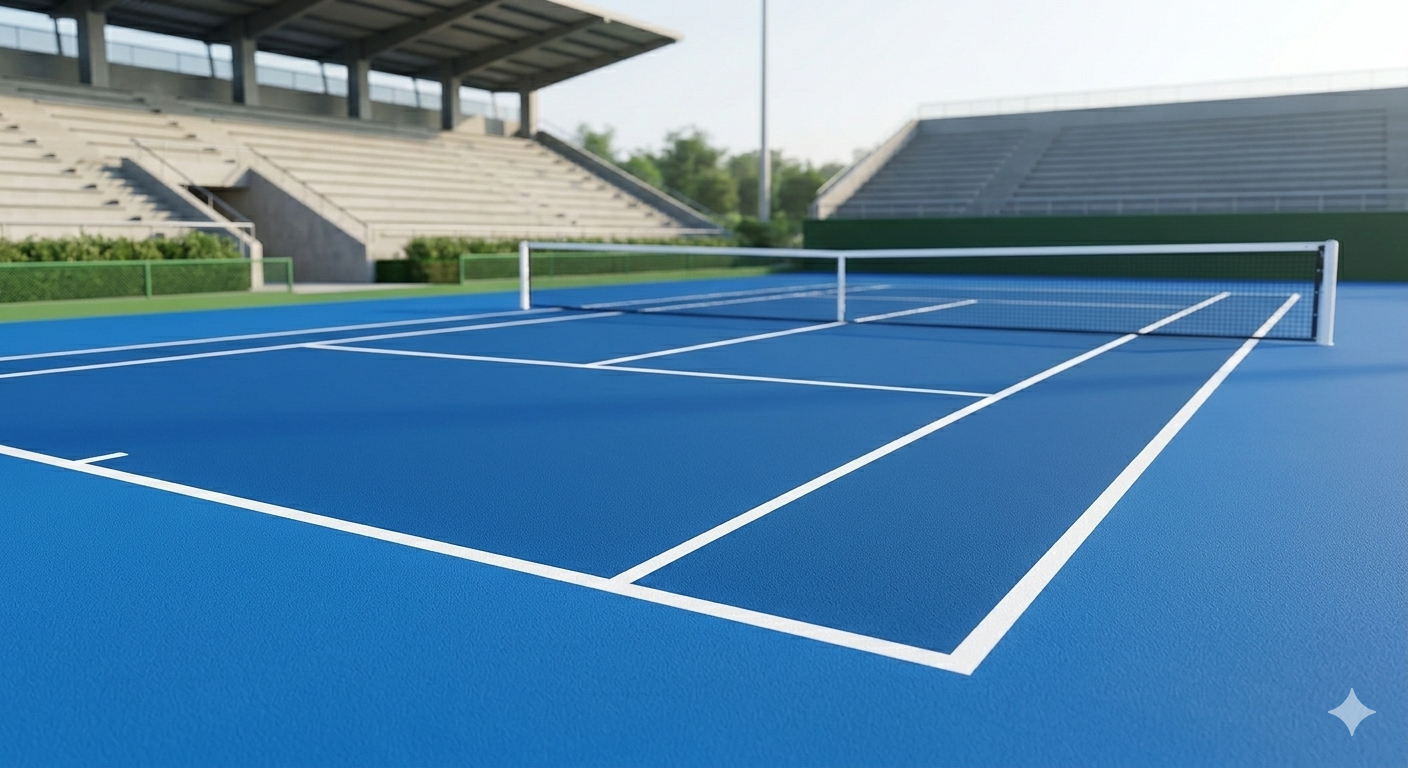
Indoor padel courts offer year-round playability — critical for monsoon-affected regions of India.
The padel court structure itself costs roughly the same whether installed indoors or outdoors. The main cost differences relate to what surrounds the court:
An outdoor padel court requires a level concrete slab as the foundation, typically 100–150mm reinforced concrete on a compacted sub-base with drainage falls. The slab preparation adds ₹2–₹5 lakhs depending on your site conditions. Outdoor courts also need to account for wind and sun exposure — adequate UV-resistant materials and proper drainage design are essential. In India's monsoon-affected regions, outdoor courts will have reduced playability for 3–4 months of the year unless a canopy structure is added (which costs an additional ₹8–₹20 lakhs).
Installing a padel court inside an existing hall or warehouse adds the structural height requirement: you need a minimum clear ceiling height of 6 metres, and ideally 8–9 metres for competition play. If the structure exists and meets this height requirement, indoor installation adds only minimal cost over outdoor. However, if you need to construct a new hall, budget ₹30–₹80 lakhs for a single-court steel PEB structure depending on size, specification, and city.
Indoor courts offer year-round playability — a significant revenue advantage in monsoon-heavy cities. For commercial operators in cities like Mumbai, Chennai, or Kochi, the additional investment in indoor infrastructure typically pays back within 18–30 months through higher booking volume.
For commercial facilities in cities with more than 3 months of heavy monsoon, indoor padel is almost always the better investment. The additional cost of the enclosure structure is recovered within 2–3 seasons through all-weather bookings.
Two padel courts can look similar but differ by ₹15–₹20 lakhs in price. Here is what actually drives that difference:
Panoramic courts (full glass on all four walls) cost ₹8–₹15 lakhs more than classic courts of equivalent quality. The extra cost comes from additional glass panels, more complex corner connections, and higher engineering requirements. For a commercial venue, panoramic is worth the premium — it looks significantly better, commands higher booking fees, and photographs well for marketing. For a housing society or school, classic is typically sufficient.
European-imported padel court systems (from Spanish, Italian, or Portuguese manufacturers) cost 30–60% more than equivalent domestic or Asian-manufactured systems. Imported systems often carry international certifications (World Padel Tour, International Padel Federation) and use higher-grade steel and glass. For international tournament venues or flagship commercial clubs, import certification may be required. For most recreational and club installations in India, a quality domestic system performs equally well at significantly lower cost.
If your site has existing level concrete in good condition, civil costs are minimal. If you need to prepare a new slab, level a sloped site, or demolish existing structures, civil costs can add ₹3–₹12 lakhs to the project. Soil condition matters: rocky sites cost more to excavate; loose or waterlogged ground requires deeper foundations. Always get a site inspection before accepting any quote as final.
Transportation costs vary significantly. Padel court systems are heavy and bulky — a single court can weigh 3–5 tonnes. Delivery to metro cities typically costs ₹30,000–₹80,000. Tier 2 or remote locations can add ₹1–₹3 lakhs for logistics, crane hire, and specialist installation teams who must travel.
Standard LED lighting for recreational play adds ₹1.5–₹2.5 lakhs. Upgrading to high-lux competition-standard lighting (500+ lux) or adding camera-optimised lighting for streaming adds ₹1–₹3 lakhs more. Some operators also add smart lighting control systems, which add ₹50,000–₹1.5 lakhs but reduce operating costs and enable automated session management.
Entry-level padel surfaces cost ₹80–₹120 per sq ft. Mid-range certified surfaces cost ₹140–₹200 per sq ft. Premium FIP-certified tournament surfaces cost ₹220–₹350 per sq ft. For a standard 200 sq metre padel court surface, this difference translates to ₹1.2–₹5.5 lakhs in surface cost alone. For recreational and club play, a mid-range certified surface is the right balance of performance and cost. Tournament certification only matters if you plan to host FIP-sanctioned events.
A bare outdoor court with no overhead cover is the minimum. Adding a canopy (polycarbonate or fabric roofing to protect against rain and intense sun) is not included in standard court prices and adds ₹8–₹20 lakhs depending on span, materials, and structural requirements. In North India, a light canopy for sun protection is a useful add-on. In coastal cities, a fully weatherproof indoor enclosure is recommended over a canopy.
Most serious commercial padel ventures build two to four courts together. Multi-court construction offers economies of scale — shared civil works, shared lighting infrastructure, and combined installation mobilisation costs reduce the per-court price by 10–20%.
| Facility Size | Approx. Total Cost (Outdoor, Classic) | Approx. Total Cost (Outdoor, Panoramic) | Notes |
|---|---|---|---|
| 1 Court | ₹22 – ₹32 lakhs | ₹32 – ₹46 lakhs | Includes civil prep and lighting |
| 2 Courts | ₹38 – ₹55 lakhs | ₹55 – ₹80 lakhs | Shared civil and electrical works |
| 4 Courts | ₹70 – ₹1.0 crore | ₹1.0 – ₹1.5 crores | Commercial facility with reception area |
| 6 Courts (Indoor) | ₹1.8 – ₹2.8 crores | ₹2.5 – ₹4.0 crores | Includes hall structure, HVAC, and amenities |
For a standalone commercial padel venue in India, a two-to-four court outdoor facility represents the most common entry point. At this scale, the investment is recoverable within 3–5 years at typical Indian padel booking rates (₹600–₹1,800 per hour per court in metro cities).
Commercial sports facilities in India increasingly combine padel with tennis, basketball, and other racquet sports.
Padel is generating significant commercial interest in India because the sport's enclosed format creates a natural monetisation model — bookings are by the court-hour, not per player. Here is a realistic assessment of the revenue potential:
After electricity, maintenance, and staffing costs of ₹25,000–₹60,000 per month, net monthly profit from a single well-managed court runs ₹80,000–₹2 lakhs. At this rate, payback on a ₹30-lakh investment is typically 24–40 months. Adding coaching programmes, memberships, and food & beverage significantly improves returns.
Padel's growth trajectory in India is steep. Unlike tennis — which requires years of skill development — padel is easy to learn in one or two sessions, making it attractive to a much wider casual audience. This broad appeal is a key reason operators across India's metro cities are investing in padel infrastructure now.
That said, success depends heavily on location. A padel court in a high-density residential area or within an existing sports club with an established membership base will fill up far faster than a standalone facility in a low-traffic area. Before building, validate demand through a feasibility study — check local padel communities, existing facilities' booking data, and the target customer's willingness to pay in your specific location.
We've seen padel installations fail — not because of cost, but because of location research that wasn't done. A ₹35-lakh panoramic court in the right location will outperform a ₹22-lakh court in the wrong one every time. Site selection and demand validation are as important as the court specification itself.
Get a site-specific quote from Durosport. We've installed padel courts across India and can give you an honest cost estimate, recommend the right court type for your use case, and manage the project from foundation to first serve.