
No single run-off distance is fixed in the Laws; boundary and safety clearances are set by ground/competition regulations.
Outdoor Sport
Cricket
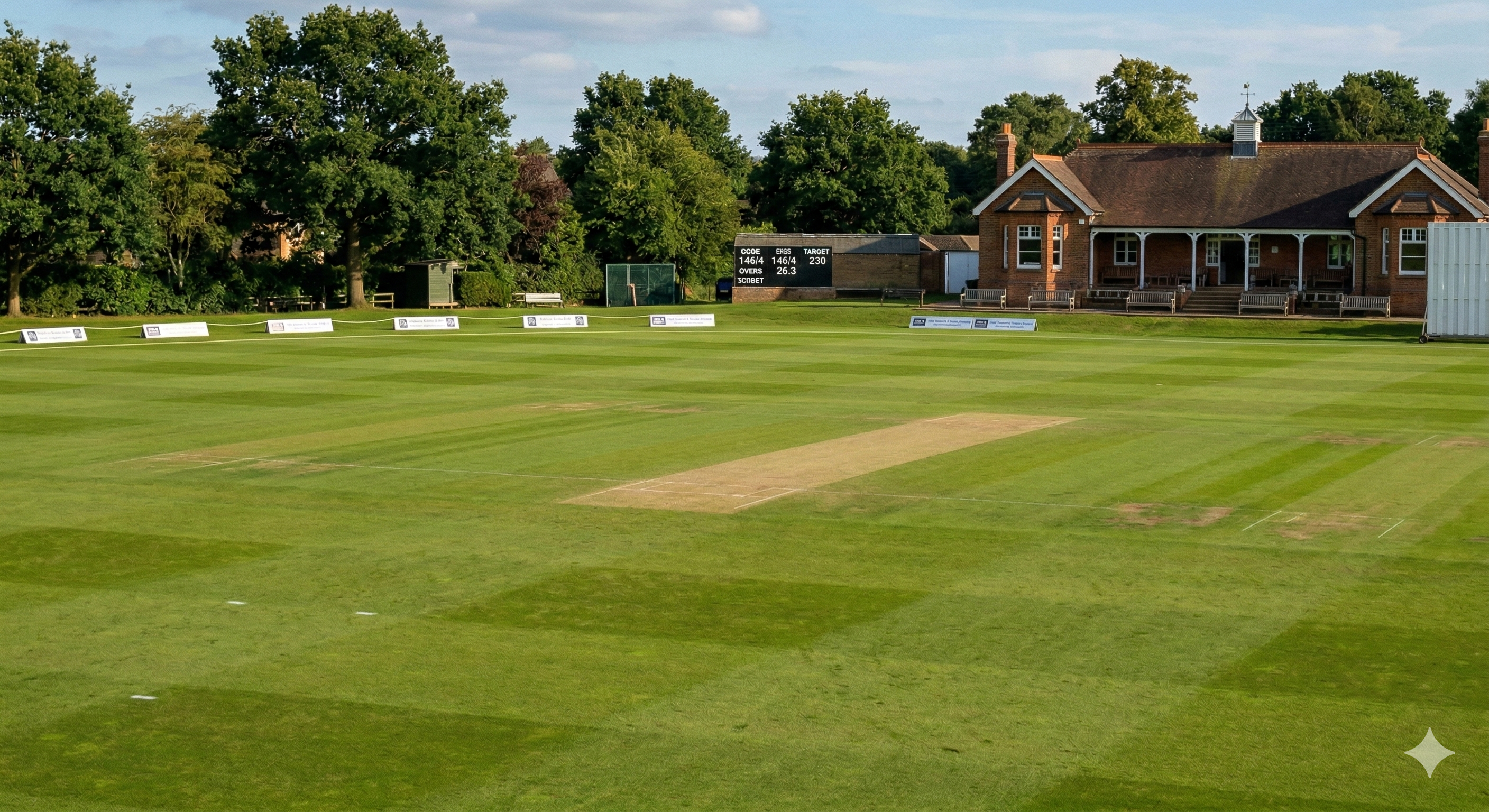
Natural and hybrid cricket pitches designed for pace, bounce, and durability with optimized drainage and outfield playability.
What Is a Cricket Facility?
Cricket infrastructure in India spans the widest range of any sport — from a simple turf practice wicket in a school to a full stadium with synthetic outfield. Durosport specialises in cricket practice facilities, box cricket arenas, synthetic wicket systems, and groundsmanship solutions for clubs, academies, and institutions.
The most common cricket facility request we receive is for practice nets with non-turf pitches — synthetic or coir matting over a concrete pitch that allows year-round practice regardless of monsoon. Box cricket, the indoor/covered arena format, has also exploded in popularity across urban India.
Whatever your cricket infrastructure need, the key decisions are: turf vs synthetic surface, indoor vs outdoor, net practice vs full ground. Durosport helps you make the right choice based on your budget, space, and intended use.
How Much Does a Cricket Facility Cost in India?
| Facility Type | Approx. Cost (INR) | Timeline |
|---|---|---|
| Single Practice Net (coir/synthetic wicket) | ₹1.5 – 3 Lakhs | 1–2 weeks |
| Multi-Bay Practice Facility (4–6 nets) | ₹6 – 15 Lakhs | 3–5 weeks |
| Box Cricket Arena (covered) | ₹20 – 60 Lakhs | 8–14 weeks |
| Full Cricket Ground Renovation | ₹50 Lakhs – 2 Crore | 16–32 weeks |
⚠ Pitch type, roofing/net structure, and lighting add to base costs. Box cricket arenas include a premium for enclosed structure and multiple pitches. Indicative India 2025–26 pricing.
What Does a Cricket Build Include?
- Site survey and pitch orientation planning
- Concrete pitch / sub-base preparation
- Synthetic pitch matting or coir cricket wicket installation
- Net structure (GI/galvanised frames, knotless nylon nets)
- Astroturf or synthetic grass outfield (for box cricket and ground renovations)
- Sight screens (white powder-coated steel)
- Pitch covers and roller storage solutions
- LED floodlighting for net practice and arenas
Dimensions & Standards
Pitch size20.12 m x 3.05 m (66 ft x 10 ft)
Court Line Markings
Bowling crease length2.64 m (8 ft 8 in)
Popping crease from bowling crease1.22 m (4 ft)
Return creases from stumps1.32 m (4 ft 4 in)
Recommended Buffer / Run-Off
Surfaces Used
Natural turf wicket
Hybrid turf
Synthetic practice wickets
Certifications & Standards
MCC
ICC
Design & Performance Notes
A high-performing wicket starts with a stable base, balanced clay content, and controlled moisture for consistent bounce.
Outfield grading and drainage determine how quickly a ground returns to play after rain.
Typical Build Scope
Sub-Base Work
Top Flooring: Natural turf wicket, Hybrid turf, Synthetic practice wickets
Fencing
Lighting
Accessories / Civil Works
Planning Framework for Cricket Projects
High-performance Cricket facilities are built through a sequence of design, engineering, and execution decisions. The first step is a technical feasibility review of the site: available footprint, soil behavior, water movement, utility lines, access points for equipment, and expected user load. This early assessment helps prevent downstream rework and allows the project team to make realistic budget and timeline commitments.
Next, Durosport aligns the design intent to your operating model. A school, academy, club, developer, and government body each require a different balance of performance, durability, maintenance frequency, and lifecycle cost. For Cricket projects, this means selecting the right surface stack-up, defining sub-base tolerances, planning drainage and slope control, and specifying ancillary infrastructure so the facility performs consistently from day one.
Procurement and installation quality control are equally important. Material approvals, mock-up validation, layer thickness checks, and tolerance measurements at each milestone reduce technical risk. Instead of treating handover as the finish line, we define a commissioning checklist that includes gameplay validation, user safety checks, and a preventive maintenance SOP so the facility retains performance over years of use.
If you are evaluating a new build versus a resurfacing path, compare options using long-term operating cost, downtime during execution, and certification goals where applicable. This gives decision-makers a practical framework rather than choosing only on upfront capex.
Implementation Roadmap, Internal Links, and Next Steps
For most Cricket projects, implementation is strongest when workstreams run in parallel: design finalization, civil preparation, material planning, and compliance documentation. Teams that sequence these streams clearly reduce delays and keep the site ready for each specialized crew. Durosport can support complete turnkey delivery or coordinate with your architect and PMC under a defined QA workflow.
To evaluate technical options in detail, start with practice turf systems, natural grass outfield planning, and sub-base and drainage civil works. These pages help you compare systems and define specifications that match your usage pattern, climate exposure, and maintenance bandwidth.
For budget planning, use the sports facility cost guide to set a realistic range before BOQ finalization. When you are ready to convert this into a project-specific proposal, submit your site details through the free consultation form and our team will share an itemized, execution-ready recommendation.
Every project also benefits from documenting post-installation maintenance and yearly inspection checkpoints. This ensures surface integrity, player safety, and predictable performance throughout the asset lifecycle.
Frequently Asked Questions
What type of pitch surface is best for practice nets?
Coir matting over concrete is the traditional choice and gives a realistic pace/bounce. Artificial turf (short-pile, dense) is increasingly popular as it better mimics grass pitch behaviour. For serious academies, a combination of coir, synthetic, and even one natural turf pitch is ideal.
How much space do I need for a box cricket setup?
A single box cricket pitch needs about 30m × 12m of covered space. A commercial box cricket arena typically has 3–4 pitches in a 50–60m × 30–40m footprint. Ceiling height of at least 8m (ideally 10m+) is required.
Can I build a cricket facility on a rooftop?
Yes, many urban schools and clubs use rooftop spaces. We conduct a structural load assessment first. Net practice facilities and even small box cricket setups have been successfully built on reinforced rooftops across Mumbai, Delhi, and Bengaluru.
How often does a synthetic cricket pitch need replacing?
A quality synthetic pitch with correct underlay lasts 8–12 years with regular brushing and maintenance. Coir matting may need replacement every 3–5 years depending on usage intensity.
Is BCCI certification required for a club practice facility?
BCCI certification is required for venues hosting official matches (Ranji Trophy, age-group tournaments, etc.). For club practice, school, or academy use, certification is not mandatory — but building to BCCI/ICC specifications ensures future upgrade-readiness.
Explore Related Pages
🏗️ Surface Materials
🏟️ Related Sports
Get a call from our team for a quotation
Tell us about your project and we will recommend the right surface and standards.
Request a call