PU flooring delivers consistent traction and energy return. System thickness and topcoat determine play characteristics.
Seamless finishes simplify cleaning and improve hygiene.

Indoor Surface
Seamless PU sports flooring offering shock absorption and consistent play for indoor courts.
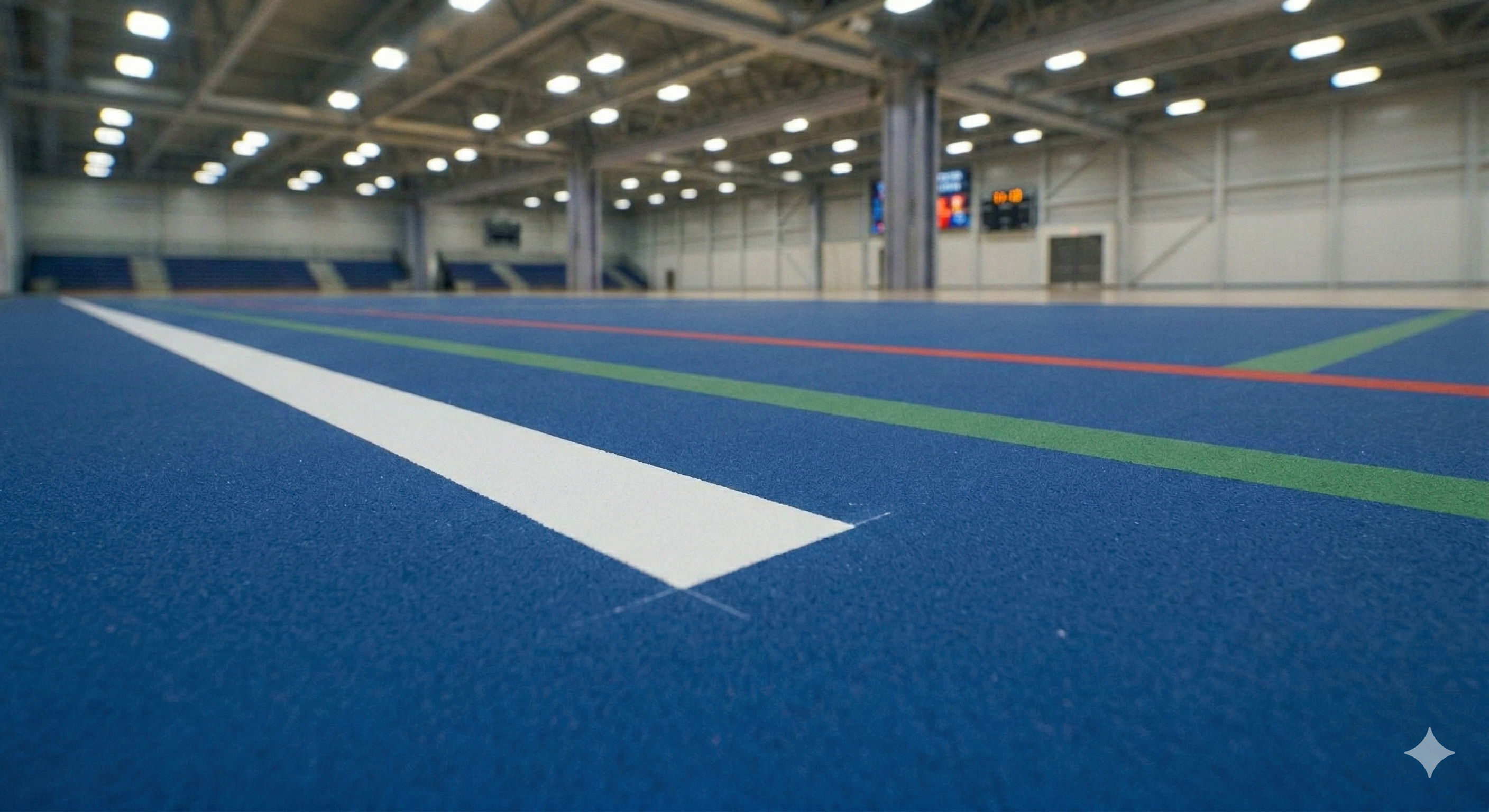
Polyurethane PU flooring for indoor sports is a seamless, poured-in-place flooring system that provides excellent shock absorption, energy return, and surface uniformity. Unlike acrylic (which is applied over concrete or asphalt), PU flooring is poured in layers to create a self-contained elastic floor system.
PU sports floors are used for badminton, basketball, volleyball, handball, and multi-sport indoor halls. They offer superior playing characteristics compared to basic PVC vinyl — the elastic layer beneath the PU surface absorbs impact from jumping and running, reducing fatigue and injury risk. BWF, FIBA, and FIVB all recognise PU flooring systems.
PU sports floors are available in two versions: PU with direct adhesion to concrete (non-sprung) and PU with a spring layer beneath (sprung PU floor). The sprung version provides the highest level of player protection and is preferred for badminton academies and professional sports halls.
| Parameter | Detail |
|---|---|
| Material | Polyurethane resin with EPDM granule or foam spring layer |
| Thickness | 4–8mm (standard PU); 8–15mm (sprung PU system) |
| Finish | Polyurethane seal coat with matte or satin finish |
| Lifespan | 15–25 years |
| India Cost Range | ₹1,200 – 2,800/sqm installed (PU sprung system) |
| Certifications | BWF Approved, FIBA Category 1, FIVB Approved |
| Maintenance | Damp mopping (weekly); avoid abrasive cleaners; recoat every 8–12 years |
| Shock Absorption | ≥25% (BWF); ≥30% (FIBA) — measured per EN 14808 |
PU flooring delivers consistent traction and energy return. System thickness and topcoat determine play characteristics.
Seamless finishes simplify cleaning and improve hygiene.
PVC vinyl (sports flooring) is a pre-manufactured roll or tile product that is glued or floated over the sub-floor — it can be removed and replaced. PU sports flooring is poured in liquid form and chemically bonds to the concrete base — it cannot be rolled up. PU provides higher performance (shock absorption, energy return) and a seamless finish, but at a higher cost. For high-performance academies and competition venues, PU is preferred.
Yes — PU sprung flooring is BWF approved and provides excellent playing characteristics for badminton. The shock absorption layer reduces strain on knees and ankles during long training sessions. Many national and state badminton academies in India use PU sprung floors. For recreational clubs, PVC vinyl is a practical and more affordable alternative.
A sprung PU floor has an elastic base layer (SBR rubber, foam, or PU springs) beneath the PU surface coat. This gives the floor a slight 'give' underfoot, reducing impact on joints. Compared to non-sprung PU (laid directly on concrete), sprung systems cost ₹400–800/sqm more. For serious athletes training multiple hours per day, the injury prevention benefit is worth the premium. For light recreational use, non-sprung PU or PVC vinyl is adequate.
Standard indoor PU sports flooring is not suitable for outdoor use — UV exposure and rain will cause rapid degradation. Outdoor polyurethane systems (like athletic track PUR) are formulated differently for weather resistance. For outdoor indoor-quality courts (with a roof but open sides), PU flooring is fine; for fully exposed outdoor surfaces, use acrylic or EPDM instead.
Moisture rising from the concrete slab (rising damp) is the leading cause of PU sports floor failure in India. A moisture vapour barrier (epoxy primer or DPM membrane) must be applied over the concrete before the PU flooring. We always conduct a moisture test (calcium chloride or RH probe) on the concrete slab before installation and will not proceed if moisture levels exceed the manufacturer's specification.
Tell us about your project and we will recommend the right surface and standards.
Request a call