PVC vinyl provides controlled slip resistance and easy maintenance for high-traffic indoor halls.
Subfloor smoothness is critical to avoid telegraphing and premature wear.

Indoor Surface
Seam-welded vinyl sports flooring designed for multipurpose indoor halls with consistent traction and ball response.
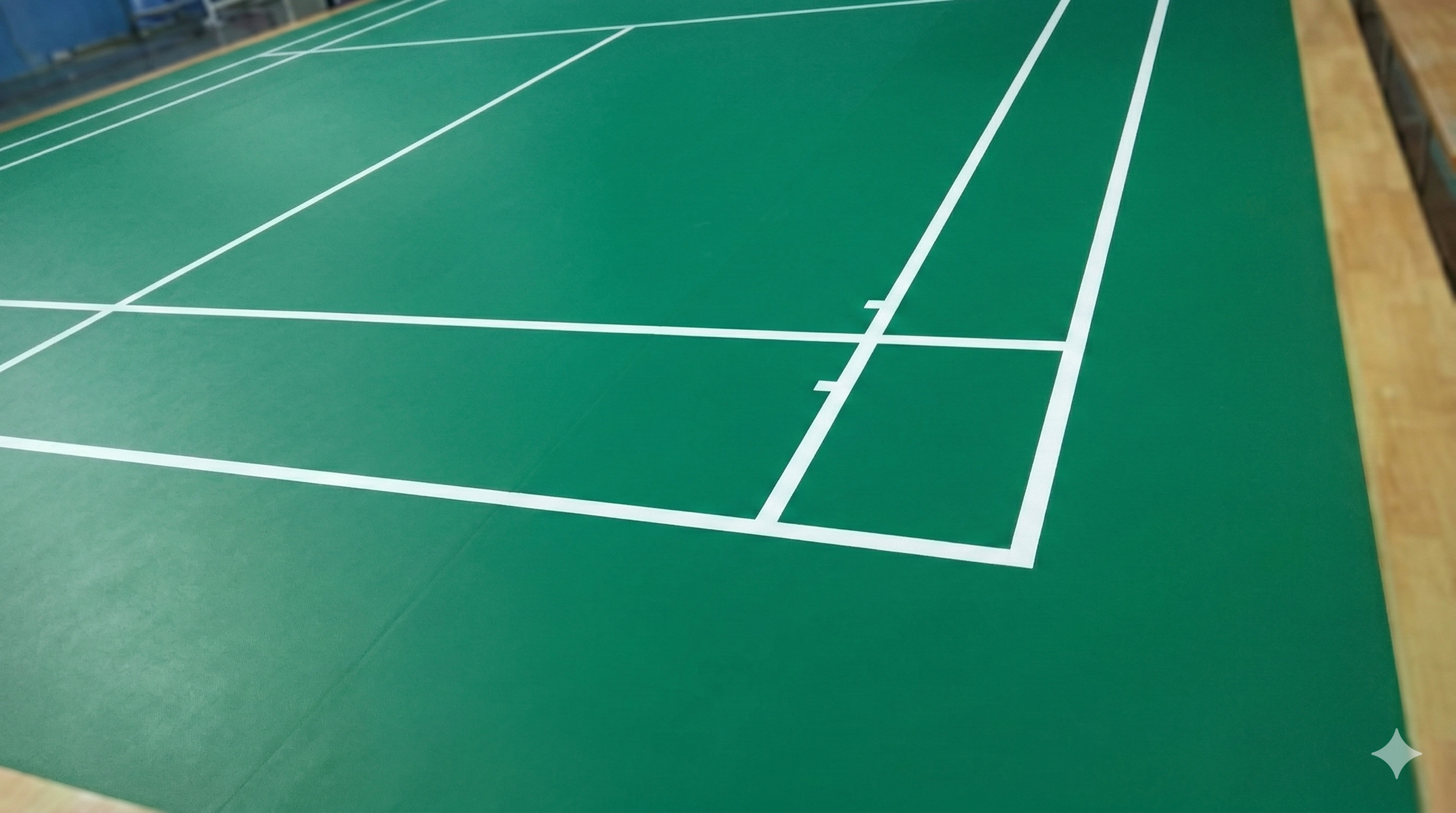
PVC sports vinyl is the most widely used indoor sports flooring in the world — found in badminton halls, basketball courts, volleyball arenas, school gymnasiums, and multipurpose sports halls. It is a multilayer vinyl sheet or tile product with a sports-specific wear layer on top and a resilient foam or cushion backing layer.
Unlike solid wood floors, PVC vinyl is moisture-resistant, easy to clean, dimensionally stable in India's variable humidity, and significantly more affordable. It can replicate the appearance of wood (for prestige) or come in solid sport-specific colours with printed line markings. Top international brands (Gerflor, Tarkett, Forbo) have PVC vinyl products approved by BWF, FIBA, and FIVB.
PVC sports vinyl rolls (typically 2m wide, 2–7mm thick) are glued to a prepared concrete sub-floor. Alternatively, loose-lay or interlocking PVC tile systems allow tool-free installation for temporary or semi-permanent applications. Durosport supplies and installs BWF and FIBA certified PVC vinyl for badminton and basketball courts across India.
| Parameter | Detail |
|---|---|
| Material | Multi-layer PVC with reinforcement and resilient backing |
| Thickness | 2.5–7mm (total system); 4–5mm most common for sports |
| Formats | Rolls (2m wide, 20–25m long) or interlocking tiles |
| Lifespan | 10–15 years |
| India Cost Range | ₹600 – 1,800/sqm installed depending on brand and specification |
| Certifications | BWF Approved (badminton); FIBA Approved (basketball); FIVB Approved |
| Maintenance | Damp mop daily; avoid abrasive cleaners; full replacement when worn |
| Shock Absorption | ≥25% (BWF); ≥30% (FIBA) — per EN 14808 |
PVC vinyl provides controlled slip resistance and easy maintenance for high-traffic indoor halls.
Subfloor smoothness is critical to avoid telegraphing and premature wear.
Commercial and residential vinyl flooring is designed for walking traffic — it lacks the shock absorption, ball-bounce performance, and slip resistance required for sports. Sports PVC vinyl is specifically engineered with a resilient backing layer for shock absorption (measured per EN 14808) and a controlled friction surface layer. Using commercial vinyl for sports courts is unsafe and will not provide the correct playing characteristics.
Yes — PVC sports vinyl is the most popular and practical badminton court surface for India. It handles humidity well, requires no HVAC, and BWF-approved brands provide the correct shock absorption and friction for badminton. Installation is faster and more affordable than PU sprung floors. Durosport recommends BWF-approved PVC vinyl for recreational and club badminton halls.
PVC vinyl requires a flat sub-floor within ±2mm variation over a 2m straight edge. Any bumps or dips will telegraph through the vinyl and create uneven ball bounce. Self-levelling compound (SLC) is applied to the concrete to achieve the required flatness before vinyl installation. This is a critical preparatory step that must not be skipped.
Line markings on PVC vinyl are applied using polyurethane court marking paint (not ordinary paint). Adding new sport lines is possible — clean the surface, tape the lines, and apply marking paint. Removing existing lines is difficult without damaging the vinyl surface. For multi-sport use, it is best to plan all line markings before installation and apply them comprehensively at that time.
Quality PVC sports vinyl lasts 10–15 years in normal institutional use. Signs that replacement is needed: surface wearing thin (losing texture and grip), visible delamination or bubbles, persistent discolouration, or significant loss of shock absorption (which can be measured). Replacement involves stripping the old vinyl, re-levelling the concrete if needed, and installing new rolls.
Tell us about your project and we will recommend the right surface and standards.
Request a call