EPDM systems provide durability and color stability in high-UV environments. Layer composition drives shock absorption and energy return.
Seam integrity and drainage are critical for long-term performance.

Outdoor Surface
EPDM granule top-layers used in resilient outdoor systems for tracks, play areas, and multi-sport courts.
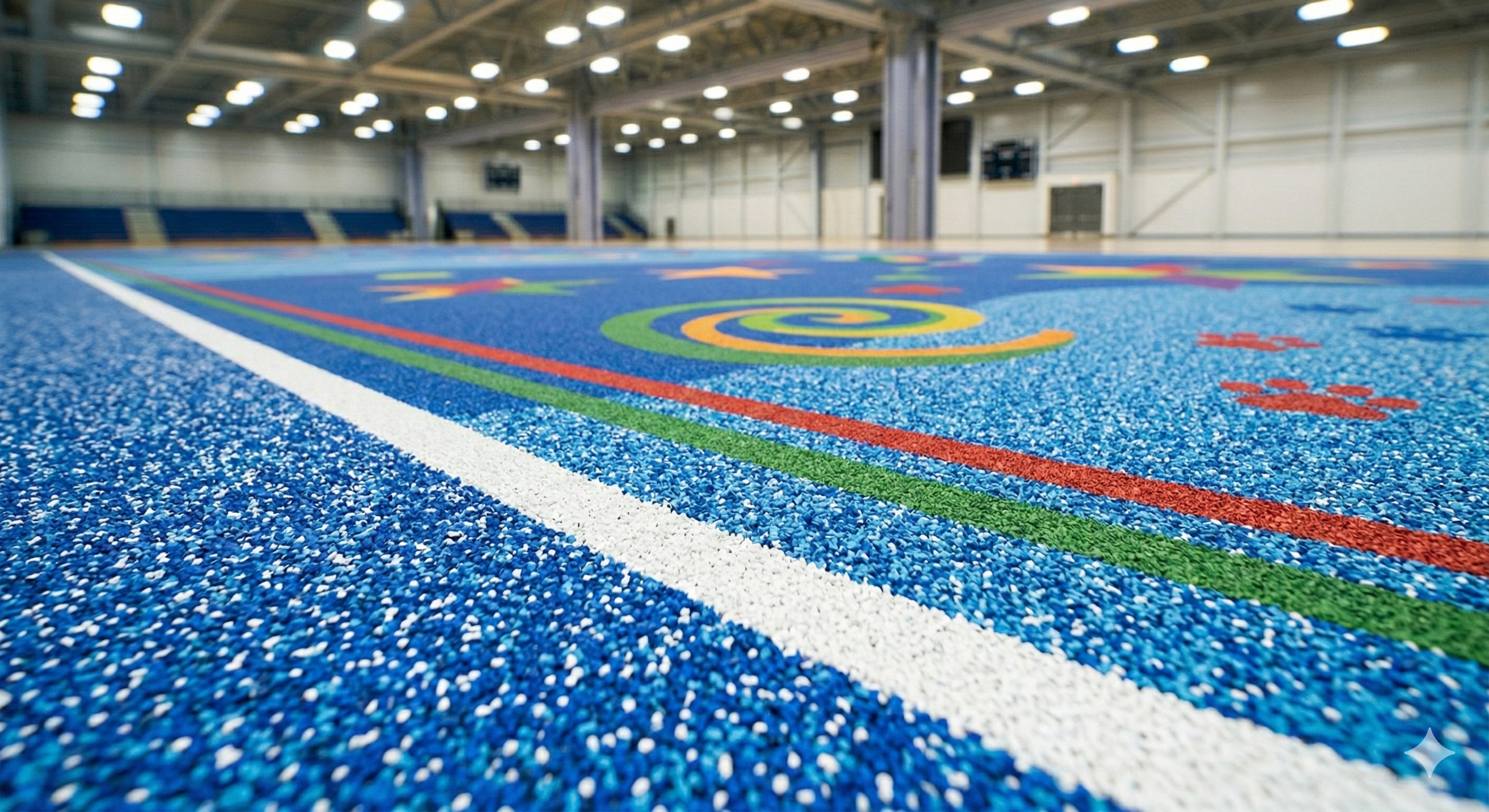
EPDM (Ethylene Propylene Diene Monomer) rubber is a premium resilient sports surface used for athletic running tracks, children's play areas, gym flooring, and multi-use game areas (MUGAs). It is available in two forms: pre-manufactured rubber tiles (bonded rubber granules) and wet-pour (poured-in-place rubber that sets as a seamless surface).
EPDM is one of the safest and most durable sports surfaces available. Its shock-absorbing properties protect athletes from impact injuries, its UV-stability maintains colour for decades, and its open-cell structure drains water rapidly. World Athletics (IAAF), Khelo India, and BS EN 1177 playground safety standards all recognise EPDM rubber as a compliant surface.
In India, EPDM rubber is primarily used for athletic tracks (400m and mini tracks), play areas (safety surfacing beneath equipment), and outdoor gym/fitness zones. It is available in many colours — red and blue are standard for tracks, while play areas often use multi-colour designs.
| Parameter | Detail |
|---|---|
| Material | EPDM granule rubber with polyurethane binder |
| Formats | Pre-manufactured tiles (1m × 1m) or wet-pour (seamless) |
| Thickness | 13–25mm for play areas; 13mm for MUGA; up to 40mm for tracks |
| Lifespan | 15–25 years (EPDM is highly UV and weather stable) |
| India Cost Range | ₹1,200 – 2,500/sqm installed (tile); ₹1,500 – 3,500/sqm (wet-pour) |
| Certifications | World Athletics compliant; EN 1177 (play areas); Khelo India approved |
| Maintenance | Sweeping/cleaning; UV-stable colour requires no repainting |
| Drainage | Excellent — open cell structure allows rapid water drainage |
EPDM systems provide durability and color stability in high-UV environments. Layer composition drives shock absorption and energy return.
Seam integrity and drainage are critical for long-term performance.
EPDM rubber tiles are pre-manufactured 1m × 1m panels that can be dry-laid or adhesive-bonded. They are easier to replace if damaged in sections. Wet-pour EPDM is mixed and poured on-site, creating a seamless, jointless surface — ideal for play areas where joints could cause tripping or allow water pooling. Wet-pour is slightly more expensive but gives a premium finish.
Yes — EPDM wet-pour is the leading safety surface for children's play areas globally. EN 1177 (the European playground safety standard, widely referenced in India) specifies the critical fall height that a given EPDM thickness can protect against. Our team calculates the required thickness based on the equipment's maximum fall height.
Yes — EPDM rubber is the standard surface for school and college athletic tracks in India. It is available in red (traditional track colour) and blue. For World Athletics Class 1/2 certified tracks at national/international standard, PUR (Polyurethane) is typically required. EPDM is ideal for school, college, and district-level tracks.
EPDM granules are UV-stable, meaning the colour is resistant to fading. The colour goes all the way through the granule — so even as the surface wears slightly, the colour remains consistent. This is a major advantage over painted concrete surfaces which fade and need repainting. A quality EPDM installation maintains its colour for 15–20+ years.
EPDM requires a stable, well-drained sub-base. For outdoor applications, a compacted aggregate (crushed stone) base is standard, often topped with a permeable asphalt layer. For indoor applications (gyms), a smooth, level concrete slab is used. The EPDM should not be installed over unstable soil or poorly compacted fill.
Tell us about your project and we will recommend the right surface and standards.
Request a call