Matting systems protect athletes during high-impact training and improve comfort in fitness zones.
Modular formats allow quick replacement and easy reconfiguration.

Indoor Surface
High-density mat systems for impact protection, safety, and modular training zones.
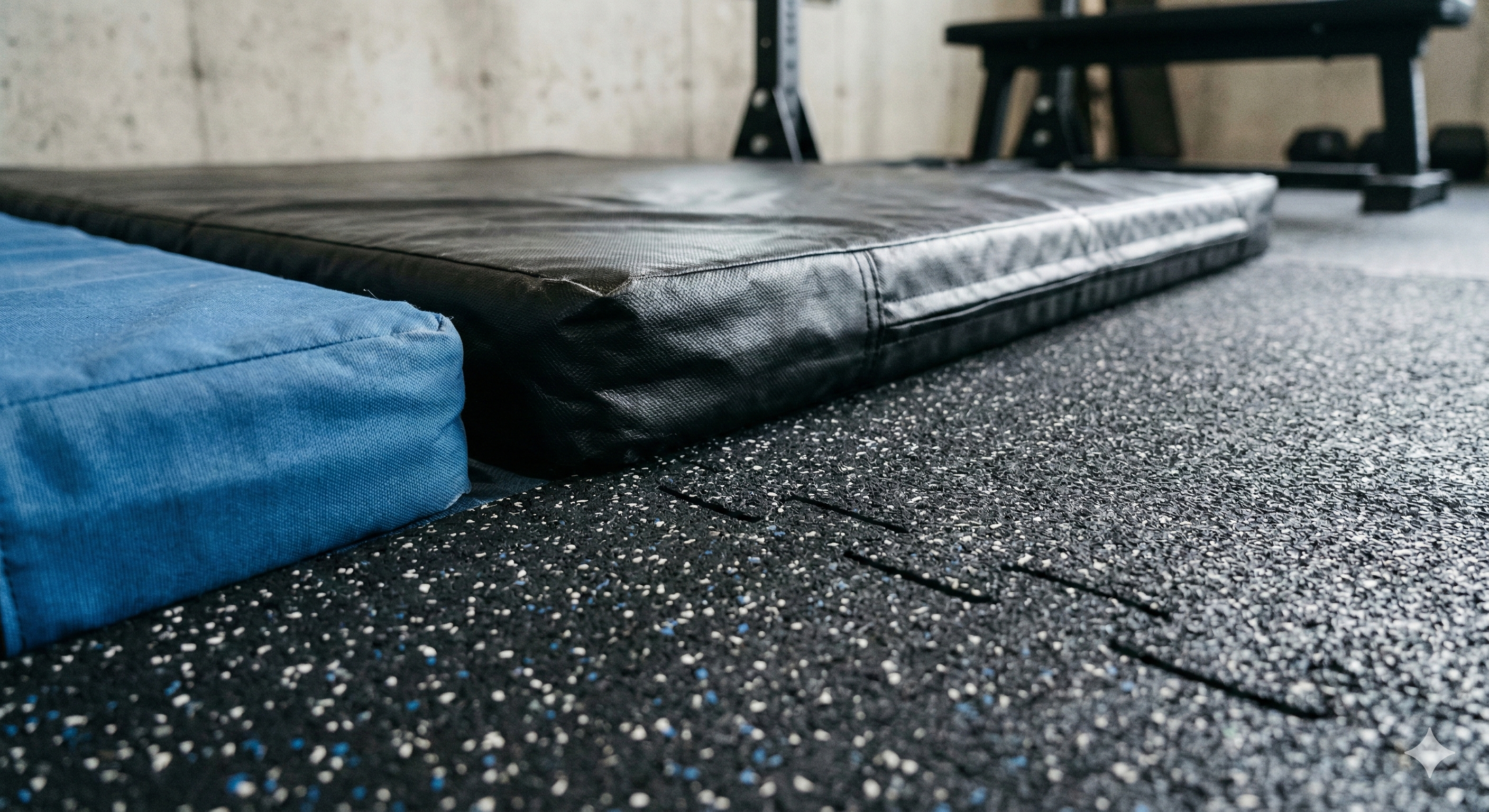
Gym matting encompasses a wide range of protective landing and training surfaces — from gymnastics crash mats and martial arts tatami to wrestling mats and fitness room yoga mats. The right mat specification depends entirely on the sport, the fall height, and the level of protection required.
In sports facilities, permanent gym matting (bonded or fixed mats) provides permanent surface protection in designated training zones. Gymnastics facilities use thick crash mats (landing from apparatus), judo and wrestling halls use tatami mats, and martial arts studios use interlocking foam or vinyl mats.
Durosport supplies sports-specific matting solutions for schools, sports academies, and clubs — including gymnastics safety systems, martial arts tatami, and custom foam crash pads to EN 12503 (sports mats) and EN 1176 (play areas) standards.
| Parameter | Detail |
|---|---|
| Material Types | Foam (PE, PU), EVA, Tatami, Vinyl-covered foam, Rubber |
| Thickness Range | 20mm (yoga/fitness) to 600mm (gymnastics landing mat) |
| Standards | EN 12503 (sports mats); EN 1140 (gymnastics); FIG approved |
| Lifespan | 5–15 years depending on foam density and use intensity |
| India Cost Range | ₹200 – 800/sqm (basic); ₹800 – 5,000/sqm (gymnastics/competition grade) |
| Surface Options | Tatami weave, smooth vinyl, foam, carpet-bonded foam |
| Gymnastics Crash Mats | 200–400mm PE foam; FIG approved; size to apparatus |
| Martial Arts Tatami | 40–50mm EVA with tatami surface; 1m × 1m or 2m × 1m panels |
Matting systems protect athletes during high-impact training and improve comfort in fitness zones.
Modular formats allow quick replacement and easy reconfiguration.
Judo, BJJ, and wrestling use tatami mats — typically 40mm EVA foam panels with a tatami weave surface (interlocking, non-slip). The IJF (International Judo Federation) standard tatami is 1m × 1m or 2m × 1m panels. For competition, IJF-approved tatami must be used. The entire combat area plus safety margins must be covered in tatami — typically a 10m × 10m competition area with 4m margins on each side (18m × 18m total).
FIG (International Gymnastics Federation) specifies crash mat dimensions and thickness for each apparatus. For uneven bars, a minimum 200mm landing mat directly under the apparatus plus 200mm collar mats around it. For balance beam, 100mm landing mats the length of the beam on both sides. Training facilities typically use 200–300mm PE foam mats; competition venues use 200mm FIG-approved mats with additional 100mm overlays.
Most gym mats (foam, EVA, tatami) are designed for indoor use only — UV exposure and rain will degrade the materials rapidly. For outdoor applications, rubber EPDM safety tiles or wet-pour rubber are the appropriate surfaces. Portable folding mats can be used for outdoor demonstrations or temporary setups but should not be left outside permanently.
EVA and PE foam mats have a lifespan of 5–10 years with regular use. The foam compresses over time, reducing shock absorption. A simple test: press your thumb into the mat — if it doesn't spring back quickly, the foam has compressed and protection is reduced. For gymnastics, regular compression testing is recommended. Martial arts tatami typically lasts 8–12 years.
Wrestling mats should use high-density PE or PU foam — typically 1.5–2.5 kg/m³ density for the core foam — covered by a vinyl surface that allows secure foot traction and sliding. The total mat should be 40–50mm thick for wrestling (thinner than gymnastics but firmer). UWW (United World Wrestling) has specific mat testing requirements for competition venues.
Tell us about your project and we will recommend the right surface and standards.
Request a call